
Why is it that burnout rates are skyrocketing, especially in Western countries? How comes that we are so often stressed and overwhelmed?
It’s because of one reason: the daily grind keeps us trapped.
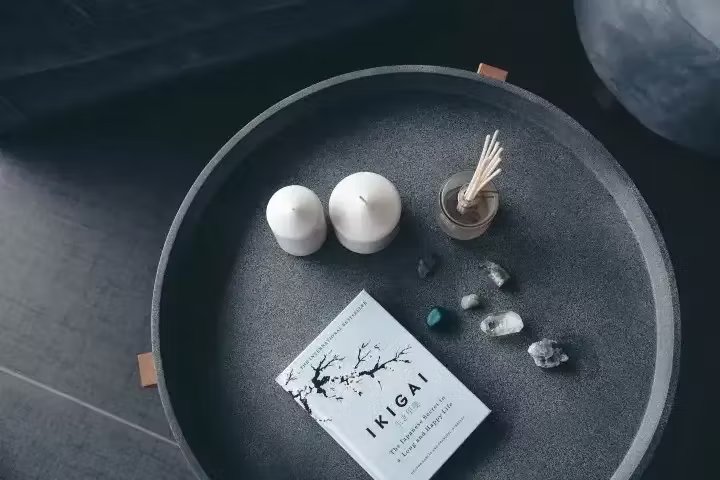
I have many years worked for large companies. My attempt to escape the hamster wheel has led me to start my own business. Now I focus on researching and helping other people to find their own way to meaningful work. Can we find meaningful work at all? The answer is: Yes! For example, with the help of the Japanese philosophy of Ikigai (“Iki” = life; “gai” = valuable).
Let me give you this grocery list with key principles that go beyond the ‘tool’ Ikigai that you may know. Use it to find your escape from the hamster wheel.
#1: Starting small
Every journey begins with a first step.
But what’s the right first step? You may start here: Set aside expectations & take responsibility! We often expect emotional support and confirmation from our environment. Yet, in the end we should be able to fulfill our needs ourselves. Because the more independent a human being is, the freer that person is.
#2: Learning to let go
Free yourself from material and spiritual ballast in order to be open for new experiences.
Japanese wisdom says: If you want to start over, you should do it immediately, because one overcome difficulty avoids a hundred new ones. Get rid of negative thought patterns, objects and also toxic relationships who do not make you happy. It’s worth breaking the power of habit.
#3: Living balance and sustainability
Inner harmony emerges when you maintain a balanced relationship with your environment.
You need an active lifestyle as much as you need restful periods. Know your limits and get into the flow! Too much work will eventually overwhelm you, while too much leisure time will make you sluggish. Find your approach to nature and focus on good things and people!
#4: Being in the here and now
You perceive the present consciously thanks to deceleration and mindfulness.
Two things are important here: 1) You cannot change what is in the past. 2) What the future will bring, you cannot know. Therefore, become present by creating moments of silence. Yet, also be creative without pressure, and use your hands to craft tangible results.
With the help of these tips, you will significantly increase your quality of life and make it easier to find your Ikigai, like using a compass. Reach out with any questions!