In the German-speaking world, we say that SMEs (small and medium-sized enterprises), the Mittelstand, are the engine and anchor of stability in the economy.
Traditionally, in this region, economic success has relied on SMEs:
- More than 99 percent of all companies in Germany are part of this sector,
- they generate more than every second euro in the national economy,
- and provide more than half of all jobs.
This leads to a situation where we have traditionally relied on SMEs to always work.
Yet, SMEs are highly exposed to the complexity and uncertainty in the economy.
One example is the topic of skills shortage.
In times of a shortage of skilled workers and demographic change, the labor market has already turned from an employer market to an employee market: The so-called skilled labor gap in Germany has more than doubled in 2021 (Handelsblatt). Innovation activity in Switzerland is already being held back by a lack of skilled workers and silo thinking (Deloitte). Also, SMEs expect the search for employees to become even more difficult due to digitalization (Credit Suisse).
I think now is the right time for SMEs to work on staying relevant for Generation Z apprentices and graduates entering the job market.
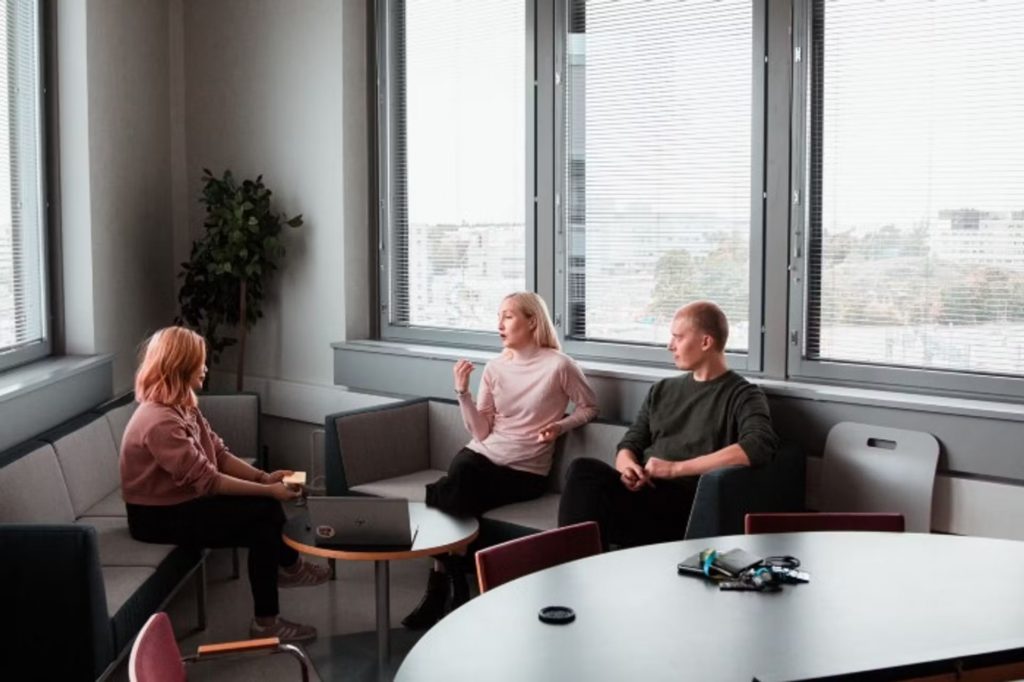
The best way to get graduates to consider the ‘Next Mittelstand’ as a future employer is by engaging in a future dialog.
Actually, it is about taking a step back and in this way raising awareness for the real needs of future employees.
From such a conversation, SMEs will learn to not predict the future from past experiences, and to engage in fundamentally new solutions. It’s about discovering flow from the movement in which SMEs themselves play a role. And it includes accepting the risks that are embedded in the evolving whole. Such a conversation will be mind-opening in a way that it helps developing capabilities that make SMEs future-proof.
Future conversations enable SMEs to transition to a form of resilience that enables dynamic management of crisis and change.
The more uncertainty and insecurity grow, the more the stability of SMEs falters.
The questions are: How can Next Mittelstand become part of the future conversation? How can SMEs strengthen their capabilities to survive in times of crisis? And what creates systemic cohesion overall?
Dialog is the currency with which we achieve stability by remaining flexible.