Strategy & Decisions
Better decisions with AI: widen the options, keep the judgement
AI can expand the range of strategic options, keep market models current, and challenge assumptions. The advantage does not come from delegating decisions, but from designing a better decision process.
24 August 2026
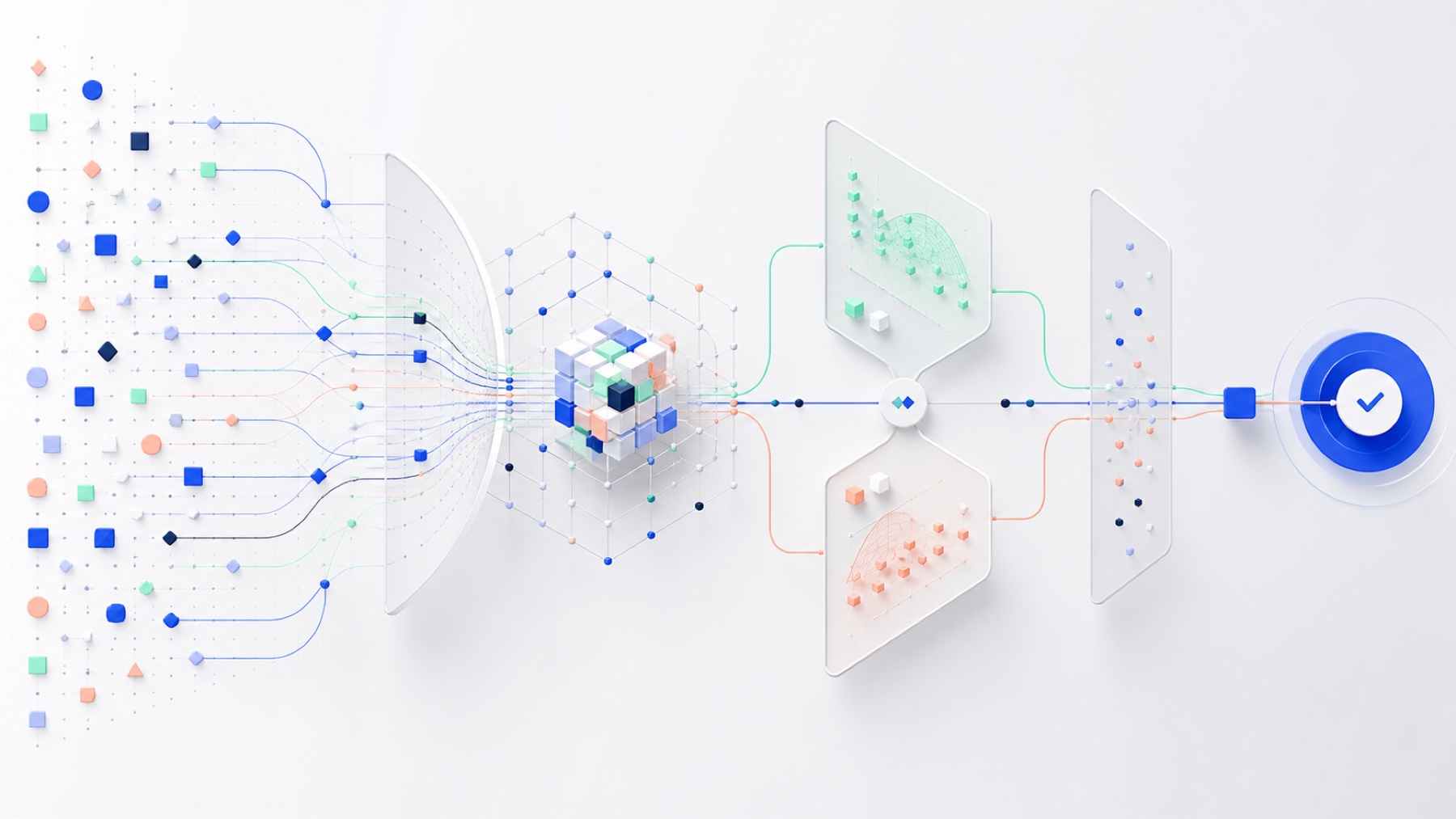
The most useful question about AI in strategy is not whether a model can produce an answer. It is whether the organisation can use AI to make the path to a decision broader, more current, and more rigorous.
That distinction matters. Leadership teams do not usually suffer from a total absence of ideas. They work within limited time, attention, memory, and meeting dynamics. As a result, they consider only a small part of the available option space and often converge before an alternative has been properly tested.
Recent work by strategy professor Felipe A. Csaszar describes three ways in which AI can expand this process: it can search a much larger set of options, build richer representations of the environment, and subject a proposal to structured challenge. A separate field experiment with management teams shows why the way a group works with AI matters just as much as the model itself.
1. Widen the option set before narrowing it
For a market entry, acquisition, product decision, or new business model, AI can generate and screen many more plausible alternatives than a leadership workshop can examine unaided.
The human task does not disappear. It moves to a more valuable point in the process: setting the criteria, inspecting the evidence, and choosing from a better short list. AI expands the search; leaders remain responsible for the choice.
2. Replace static snapshots with living models
Strategy often relies on quarterly reports, fixed customer segments, and familiar two-by-two frameworks. These remain useful, but they simplify a changing environment.
An AI-supported working system can connect approved internal knowledge with current market, customer, operational, and regulatory signals. The aim is not a larger dashboard. It is a model that makes changes and uncertainty visible before a decision is made.
3. Make challenge part of the workflow
Healthy disagreement is difficult to institutionalise. Hierarchy, time pressure, and group dynamics encourage teams to settle too quickly.
AI can make structured challenge routine. One role can build the strongest case for an option, another can identify weaknesses, and another can examine the likely response of customers, competitors, regulators, or employees. These roles do not vote. They help the team see what it may otherwise miss.
4. Use AI with the team, not beside it
The second HBR study observed that teams initially became more passive when AI entered the meeting. The improvement came when they treated it as part of a collective dialogue: team members introduced their roles and expertise, changed the AI's role during the discussion, and paused to judge its outputs together.
This is a useful warning. Adding an AI window to a meeting can reduce participation. Designing explicit AI moments into the agenda can improve it.
A practical first decision workflow
Choose one real decision and define:
- the decision owner and the decision deadline
- the evidence and internal knowledge the system may use
- the criteria by which options will be compared
- the AI roles used to generate, challenge, and stress-test options
- the points at which the team must pause, discuss, and decide
- the record that explains why an option was chosen or rejected
Measure the quality of the process, not the amount of generated material. Did the team consider genuinely different options? Were assumptions and missing evidence visible? Did the challenge change the recommendation? Can the final decision still be explained by the people accountable for it?
The competitive advantage is unlikely to be access to a particular model. It comes from combining proprietary knowledge, a repeatable decision process, and the ability to learn faster without surrendering judgement.