European AI Adoption
A joint offer for manufacturing: visiting EDIH Südwest
EDIH.li and EDIH Südwest want to combine AI transformation, secure AI and testing before investment for manufacturers. What we discussed in Villingen-Schwenningen.
9 November 2026
1 / 3
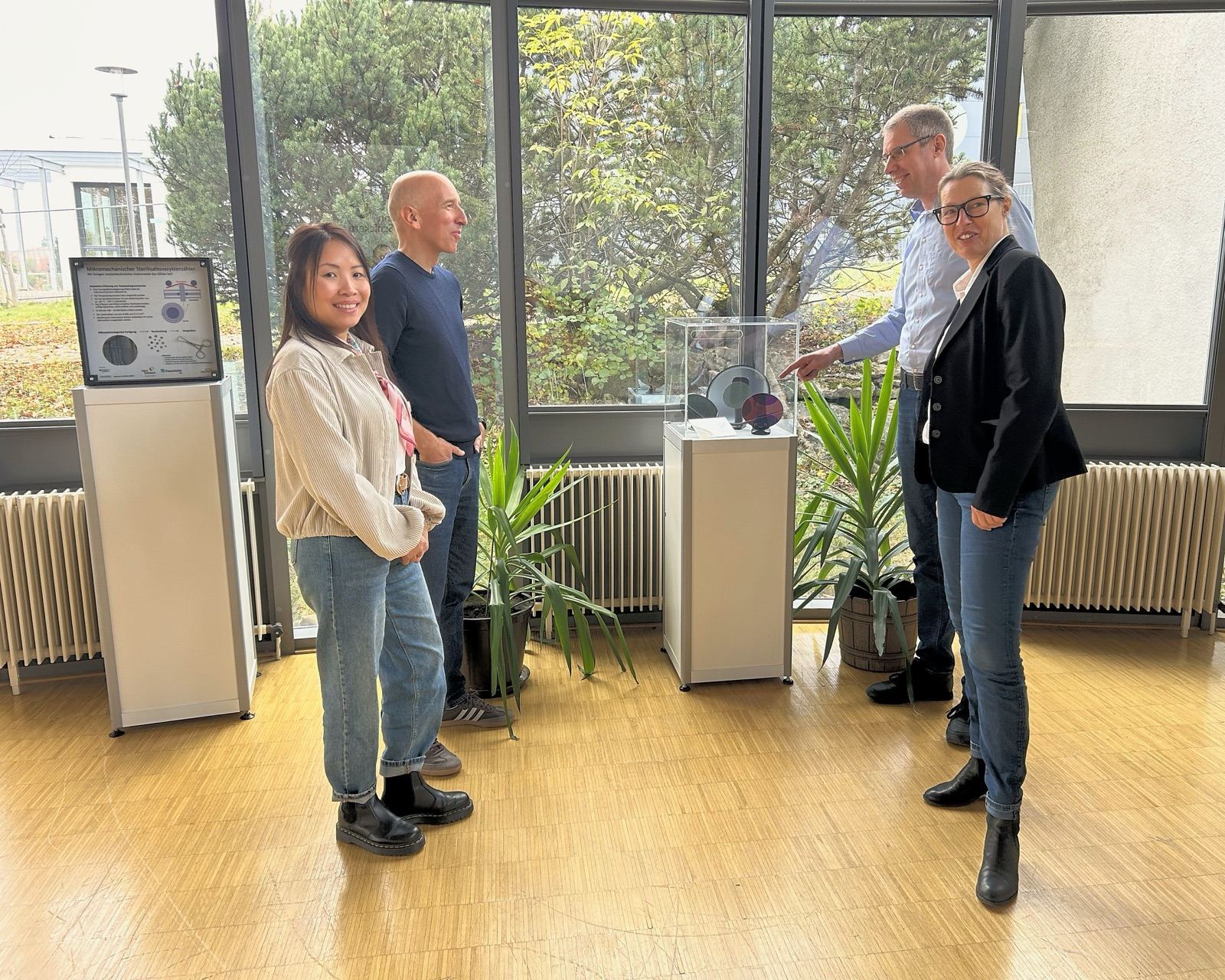
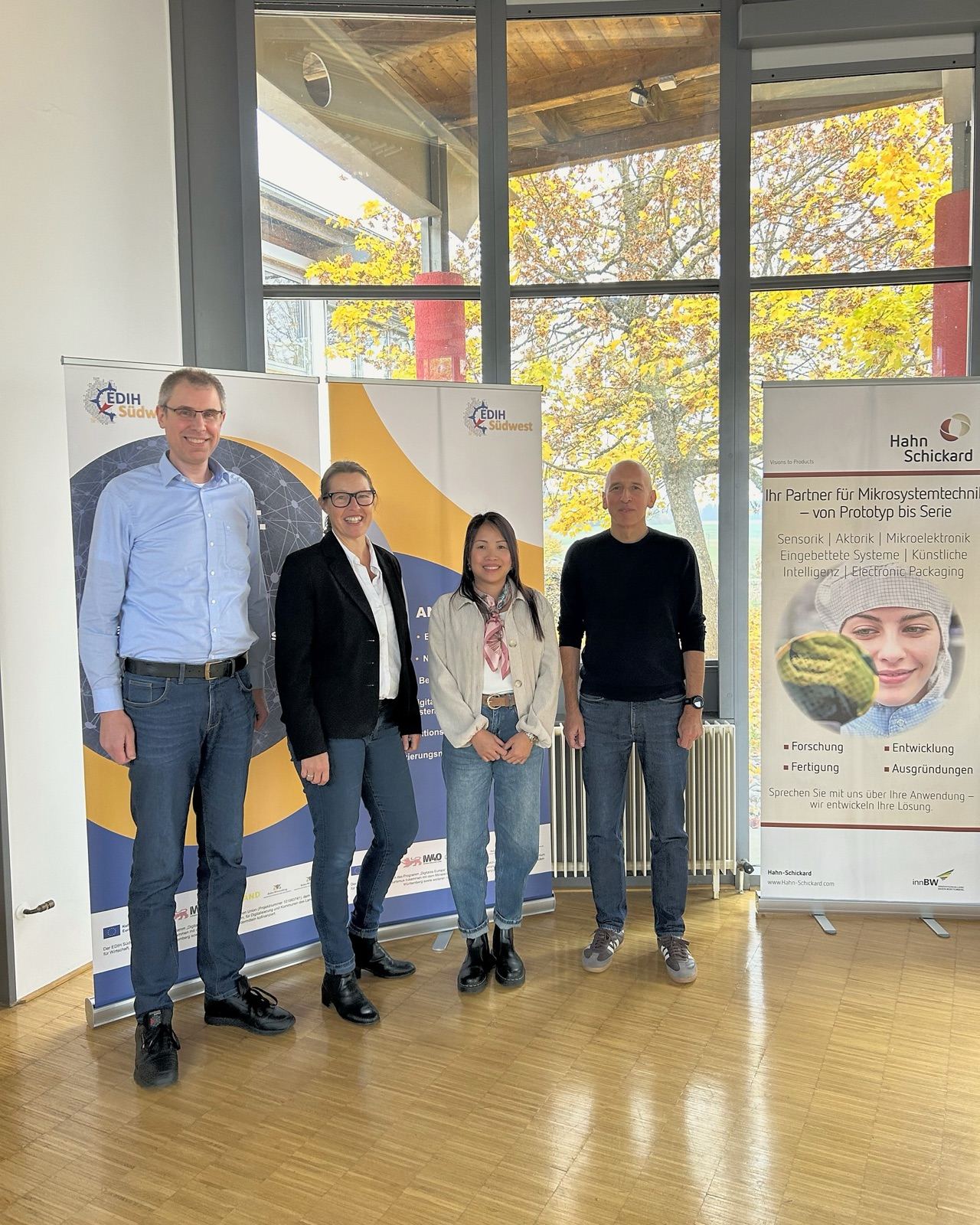
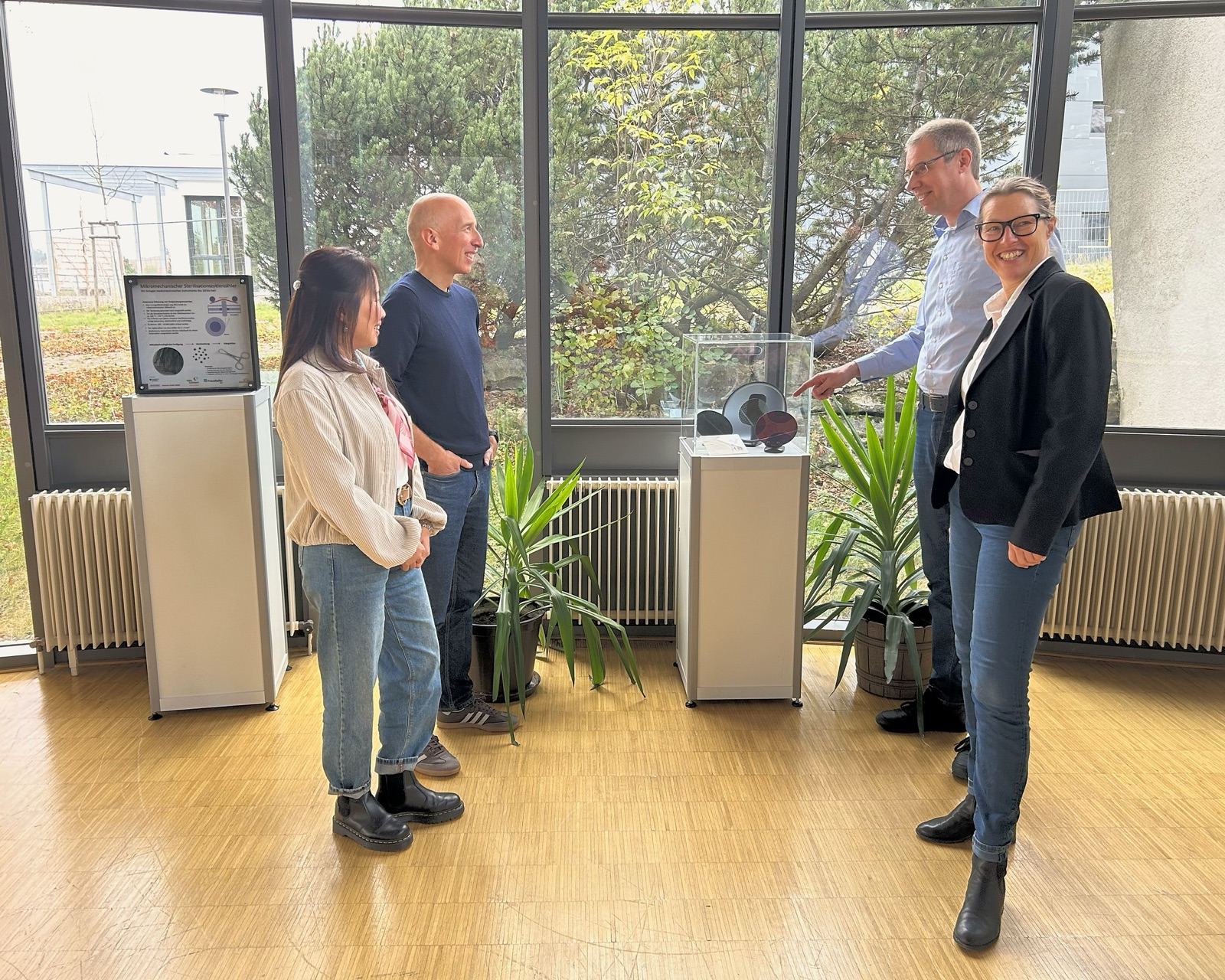
How do you combine AI transformation, secure AI and innovative manufacturing in one offer? Phi Yen Oehri and I spent five hours on this question at EDIH Südwest. We met in Villingen-Schwenningen on Friday 6 November. Our hosts were Sven Spieth from Hahn-Schickard and Tanja Moschke-Becker from SICOS BW.
One axis connects us. It runs from Schaan across Lake Constance, northern Switzerland and part of the Rhine into southern Baden-Württemberg. On both sides, firms think in production and want to test AI for their own work.
Where each hub starts
EDIH Südwest starts with the technical question. Sven puts it this way: "The customer has a concrete problem. We always come straight in with the solution." Hahn-Schickard develops sensors, prototypes and small to medium series. These are volumes that a large factory is not interested in.
EDIH.li starts with the business model. Some firms see AI as a threat, others as an opportunity. We support the transformation from start to finish. It covers an initial assessment, process analysis, choosing use cases, the decision and the introduction. Governance, the AI Act and the employees are part of it from the beginning.
What belongs together
The discussion made clear which three things a joint offer needs.
Transformation: technology alone has no effect; the people in the firm must come along. Our process analysis follows the St. Gallen Management Model. It works in production as well as in administration, also with Lean and Kaizen.
Secure AI: many firms do not want to hand over their data or buy expensive hardware. The data stays in their own network. The model runs in secure hosting in an AI Factory such as HammerHAI. Several firms can even use a shared data basis this way. Tanja showed how Bosch trained a model with federated learning, without sharing raw data.
Innovative manufacturing: the hidden champions in Liechtenstein, Switzerland and Baden-Württemberg think in production. That is where their inventive spirit lies. Some founders have carried an idea for years and never tested it. With AI, the barrier to testing it is much lower today.
How it should fit together
We support the transformation up to the roadmap. When a question needs technical depth, Hahn-Schickard tests before the investment. It uses sensors, prototypes and small series. HammerHAI brings computing power and advice on open models. Short sandbox projects of one to three months should become free of charge. This is planned, but not yet final.
Phi Yen said: "With our approach, we can go into any industry." Visible expertise opens the door, though. So we are collecting joint use cases. One example is a gripper that measures weight while lifting. Another is a hall scan for robots that takes one hour instead of seven in the data centre.
Check first, then invest
Sven reminded us that a new technology is often not necessary at all. Tanja pre-checks cases "with minimal effort" before anyone spends money. Both protect firms from expensive detours.
A network behind every hub
There is also the European Digital Innovation Hubs Network with over 150 hubs. For firms in our region, this is a big advantage. Behind one hub stand experts across Europe. What is missing in Schaan or Villingen-Schwenningen can often be found in another hub.
What happens next
Tanja will send us the access rules for the European computing centres and example use cases. We are preparing a joint first presentation. We will also choose firms that we approach together.
To everyone in manufacturing: which question would you like answered before your next investment? Write to me, or reach us through EDIH.li.
Quotes from Sven Spieth and Phi Yen Oehri are translated from German.