AI & Innovation
How AI communities learn from each other: Manchester and Liechtenstein
What two conversations in Manchester reveal about co-production, regional collaboration and the practical AI questions facing SMEs.
26 September 2026
1 / 8
AI communities learn from each other when they examine a concrete task together: how is it done today? What did an AI trial improve, where did it go wrong and who could spot the error? Only with that information can another region usefully test and adapt an approach.
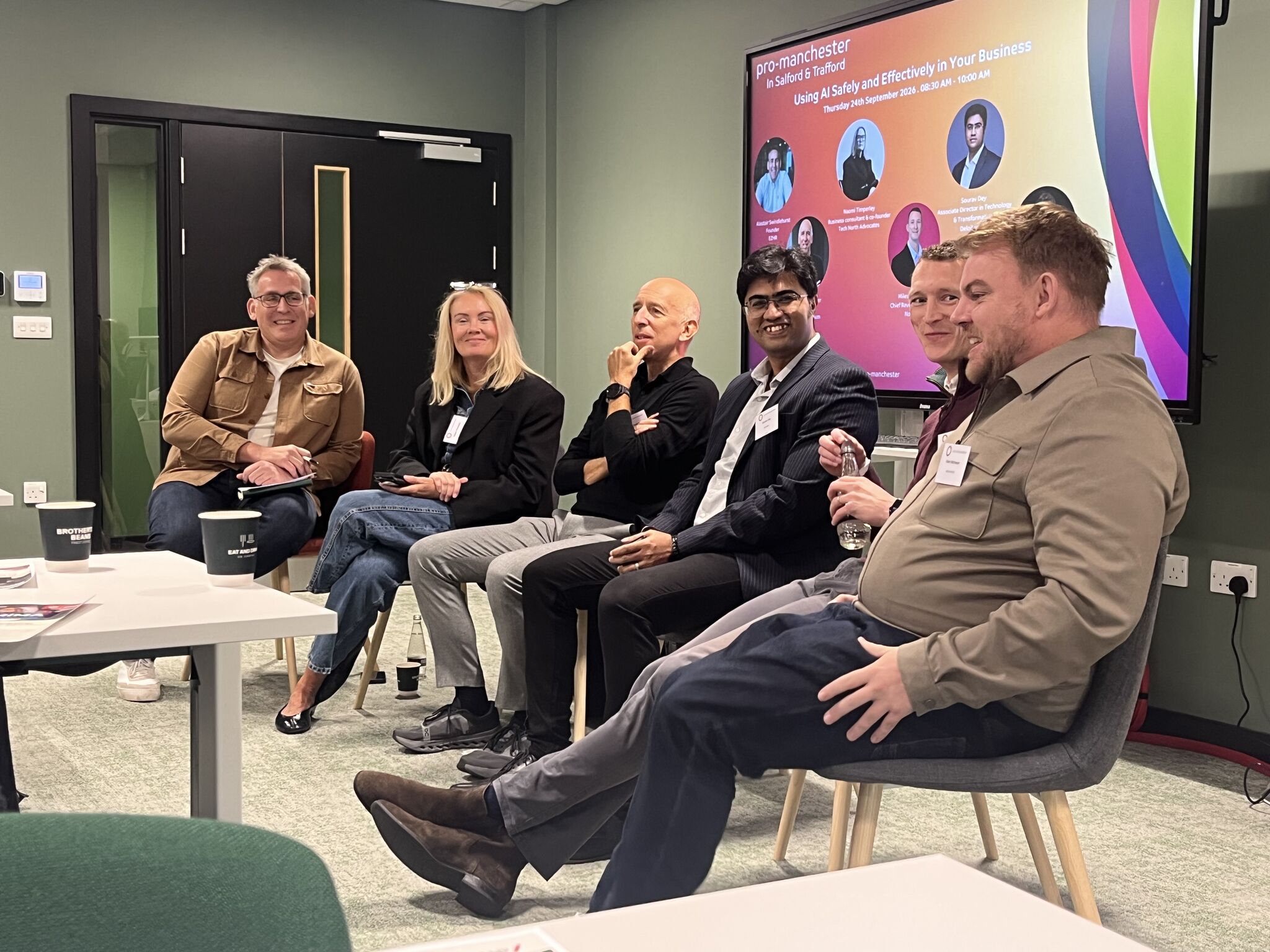
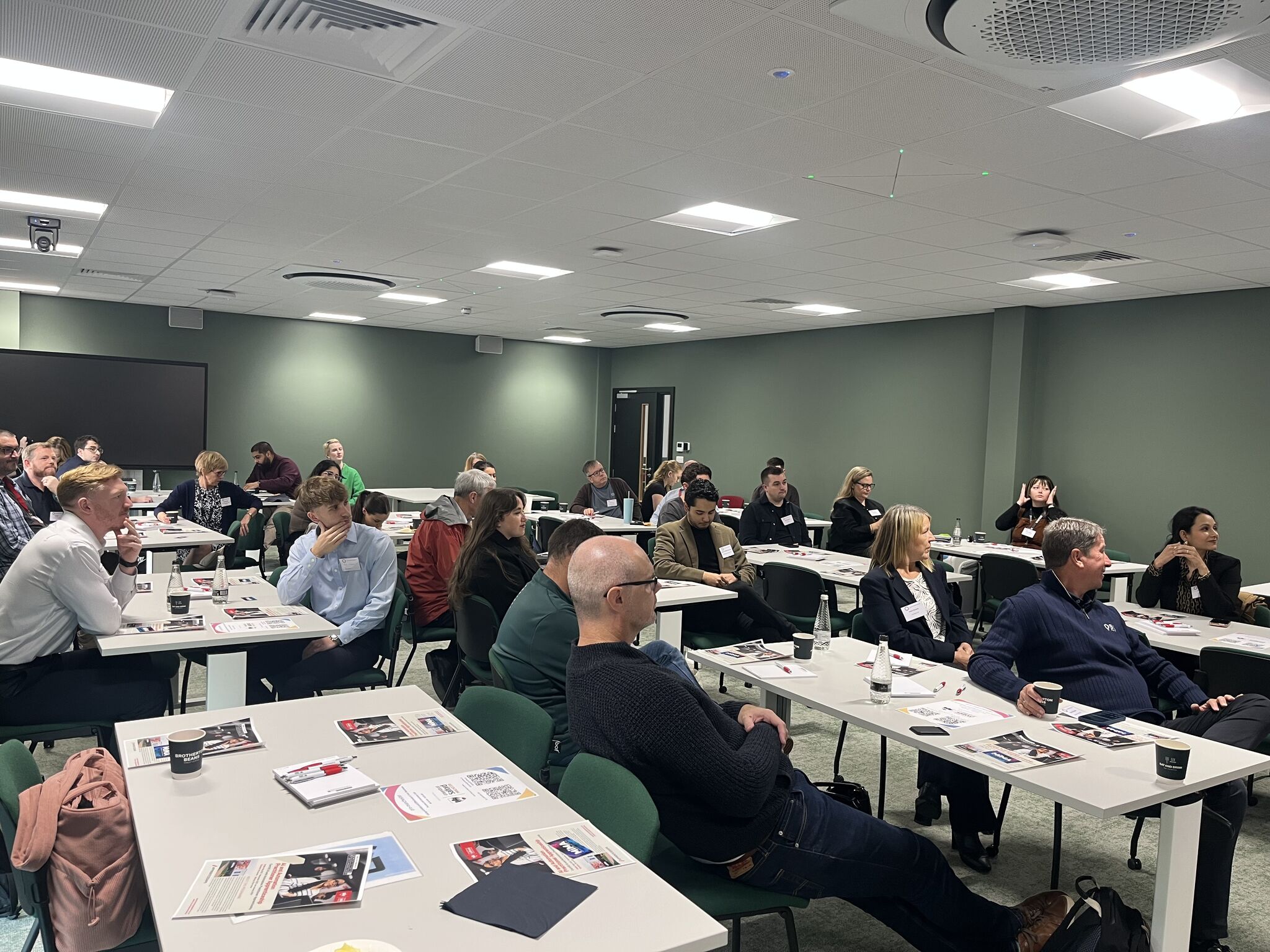
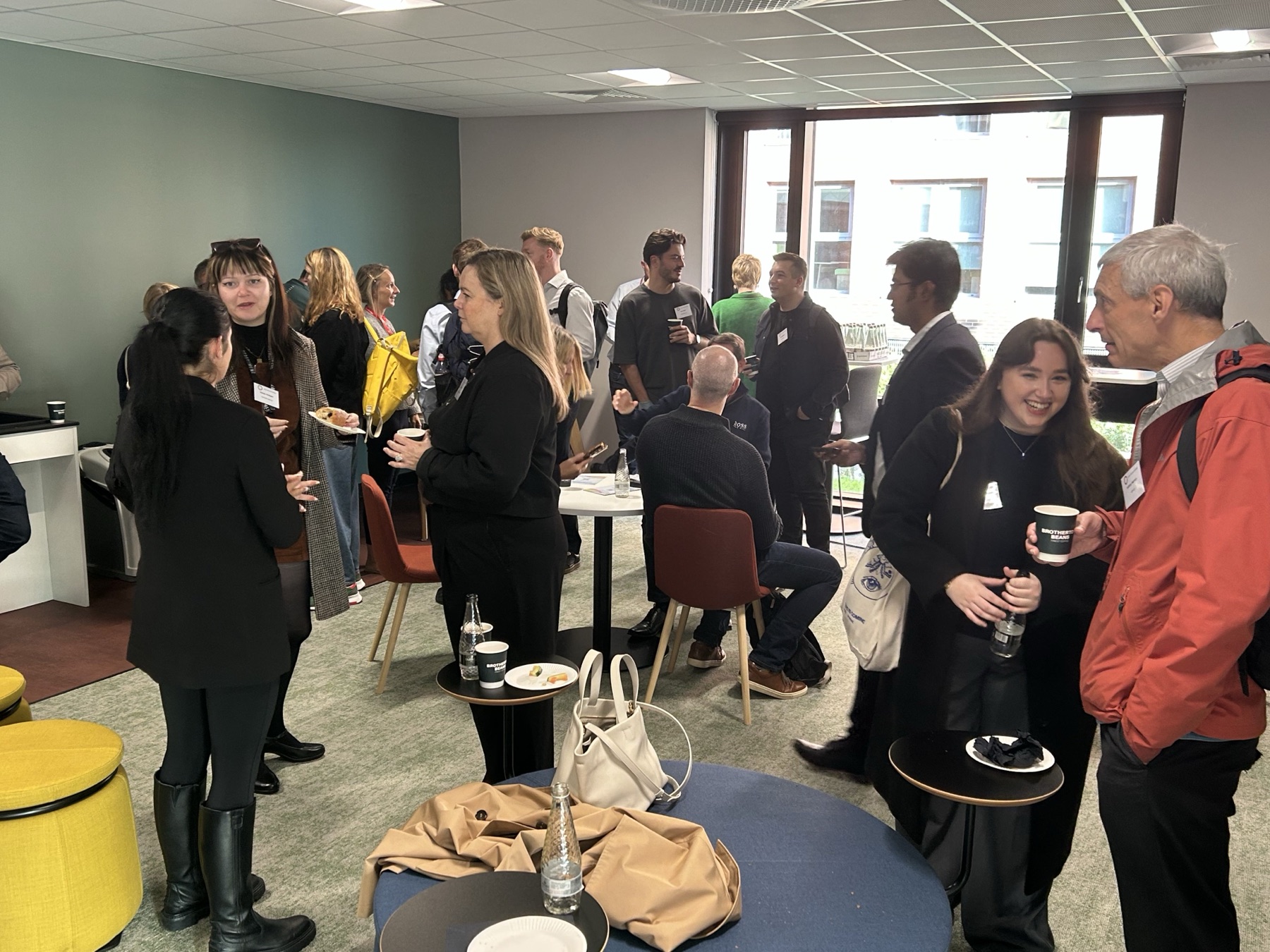
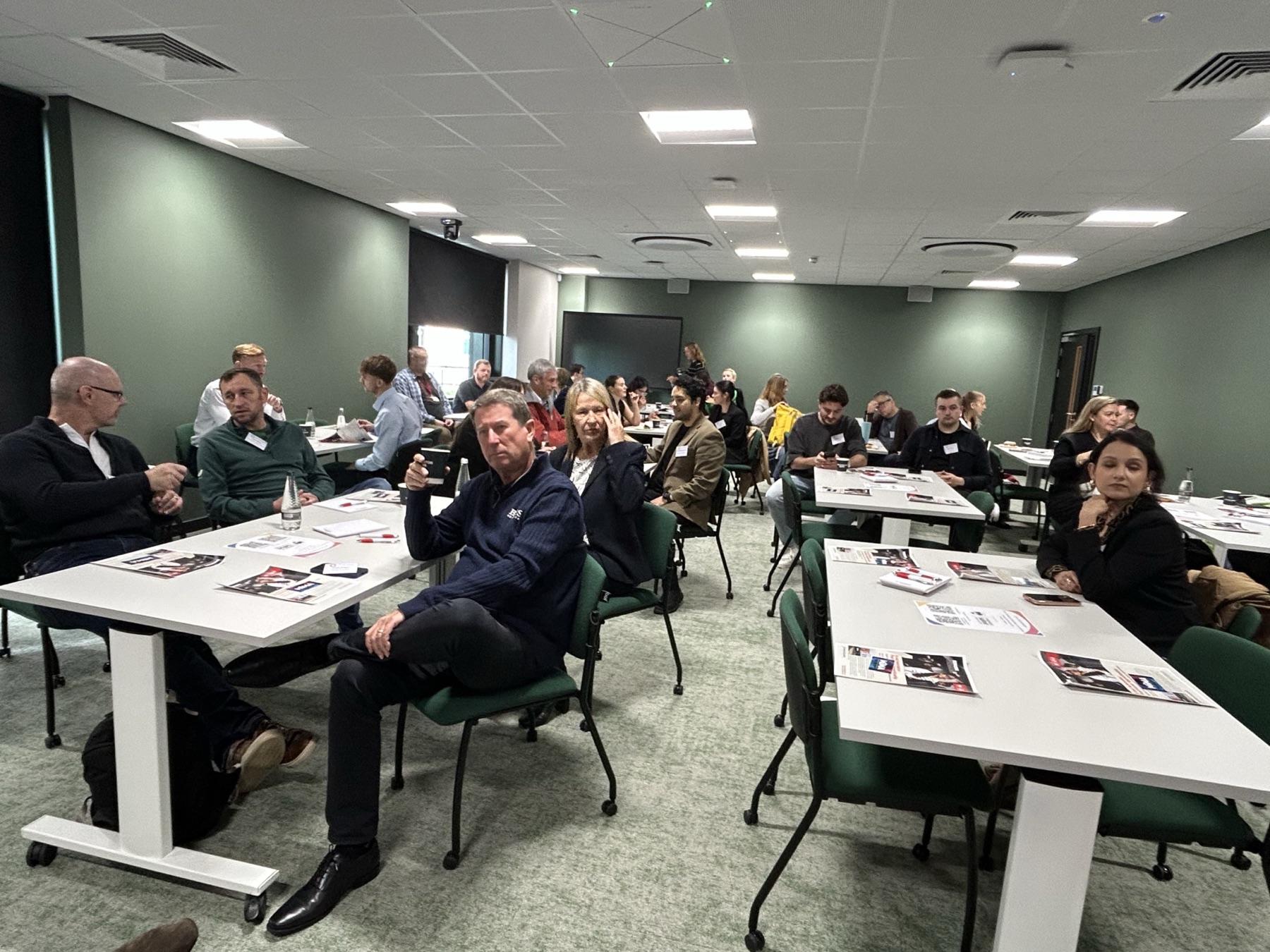
Two conversations in Manchester brought this home to me that week. On 23 September, I spoke with people at Manchester Metropolitan University about their work with small and medium-sized businesses. The following morning, I joined the pro-manchester panel “Using AI Safely and Effectively in Your Business” at the University of Salford. Around 70 people attended.
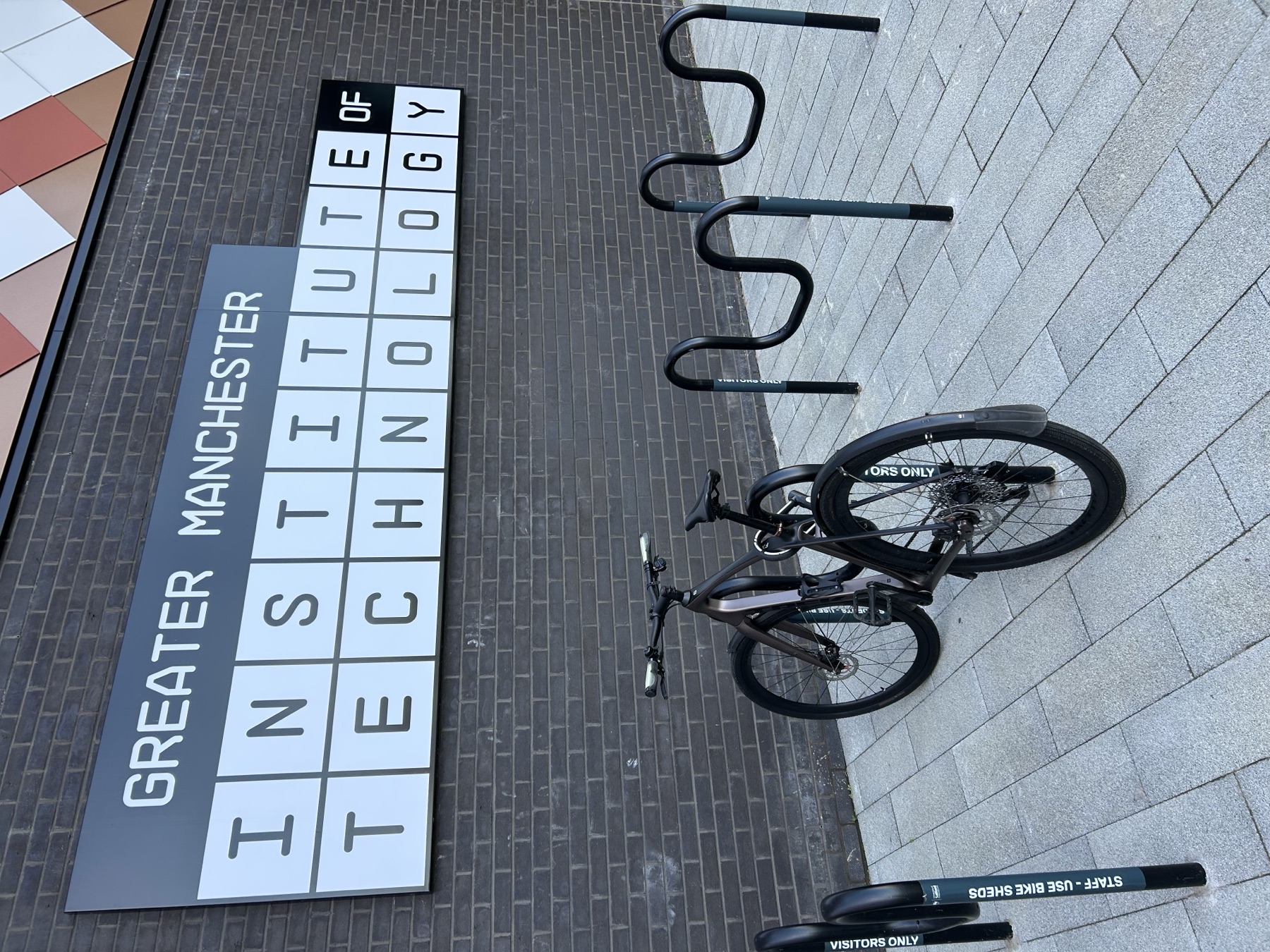
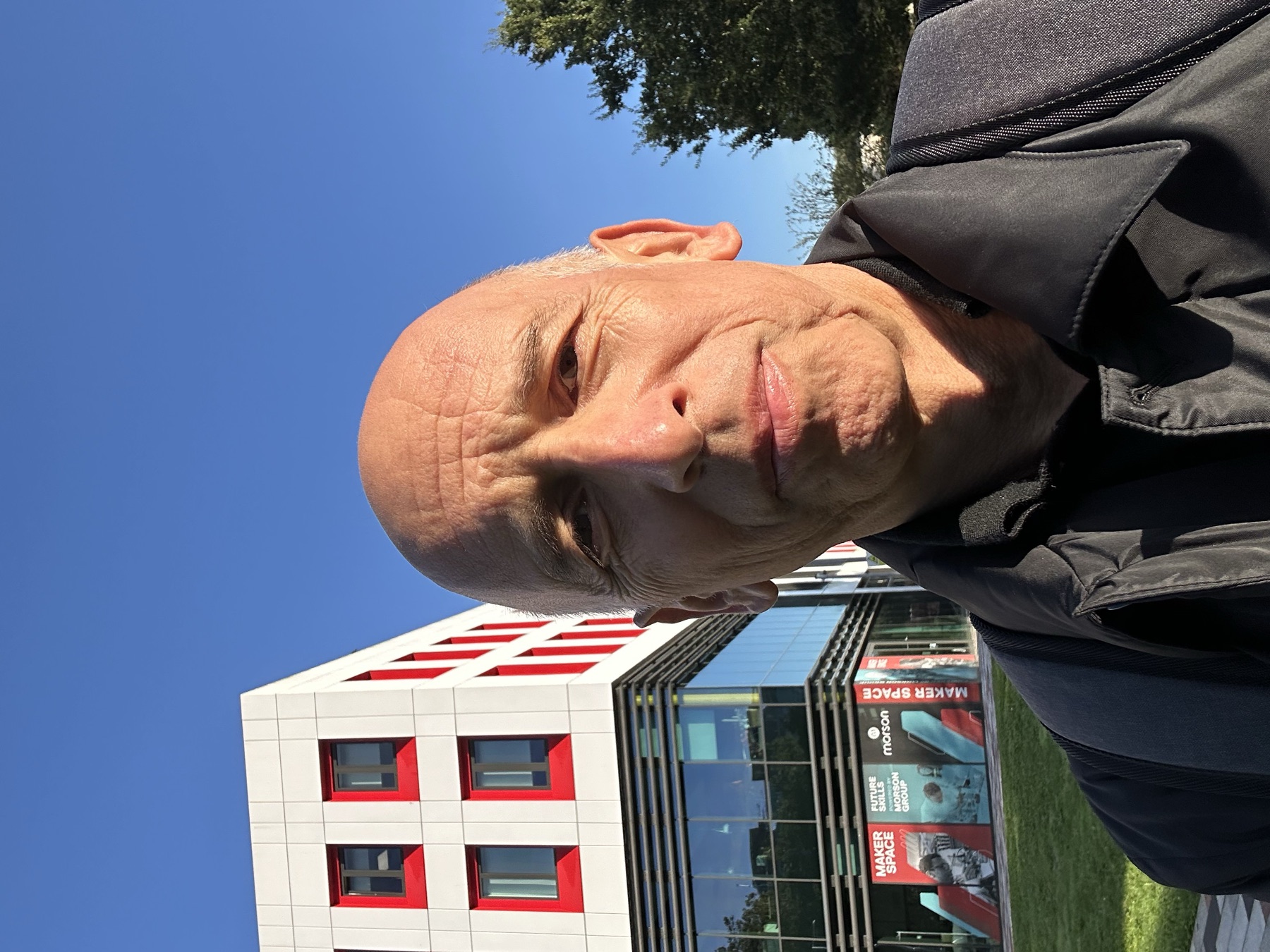
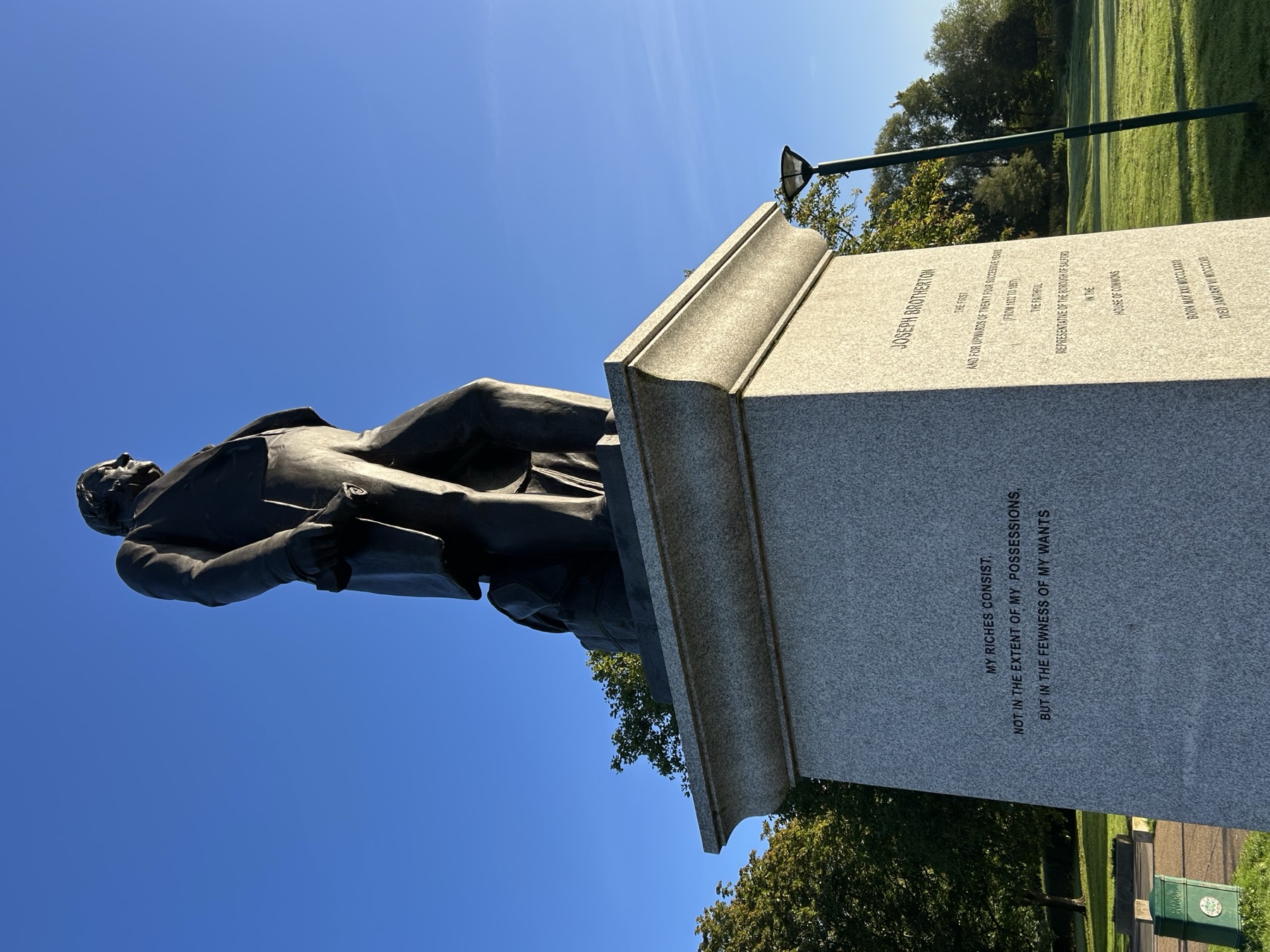
The venue had a personal significance. More than 20 years ago, I wrote my PhD at the University of Salford. The campus has changed considerably since then. The new Greater Manchester Institute of Technology building brings the university, colleges and employers together, connecting technical education to the skills businesses in the region need. Our AI discussion came back to the same point: knowledge has to reach the work itself.
Building AI capability together in Manchester
Manchester Met has developed its support for SMEs through several programmes. In our conversation, the team described the journey from Cyber Foundry through AI Foundry and the Centre for Digital Innovation to its current AI offer. Researchers, technical specialists and businesses work on business ideas and, in certain formats, prototypes. The university describes its digital innovation support publicly.
I was particularly interested in the Responsible AI SME Charter. According to our conversation, businesses and community groups contributed to its development. Manchester Met offers a two-day programme in which businesses relate responsible AI use to their own practice. One sentence from the conversation stayed with me: “I don't think you build trust unless you actually go on the journey with people.”
Co-production here means more than asking for feedback on a finished concept. Businesses, researchers and people affected by an application bring different experiences. Together, they can identify a worthwhile task, risks they might otherwise overlook and what would count as a useful trial.
Different regions, similar questions
I introduced EDIH.li at the meeting. We are building the hub in Liechtenstein to help SMEs define a first AI task, find suitable business and technical partners and make practical use of European support. In a small economy, businesses, specialists and public bodies can work closely together. Many companies also operate across borders and different requirements.
Manchester brings years of research and experience from regional SME programmes. EDIH.li can contribute experience from Liechtenstein and the European Digital Innovation Hub network. An exchange would be useful if both sides show what works under their particular conditions and what does not. We discussed possibilities; no joint project was agreed.
What do SMEs actually need to resolve?
The Salford panel began with a small but revealing error: a Copilot answer about apprenticeship funding sounded confident, yet relied on the previous year's rules. A university colleague discovered the mistake because she challenged the source.
I spoke about interviews with compliance managers. Much of their time goes into finding current rules, gathering information and preparing reports. AI could take on part of that preparation. Whether this creates value also depends on specialists checking the sources and then having more time for advice and decisions.
Naomi Timperley summed up the starting point: “Map what actually happens.” Where is data entered twice? Where is someone waiting for information? At which point is professional judgement needed? A question from the audience went further: how will people entering a profession learn to critically appraise AI output if they no longer develop the foundations through doing the work themselves?
These are questions SMEs need to answer in a first AI trial. They concern workflows, data, quality, responsibility and skills. A new tool alone answers none of them.
A workflow to learn from together
My proposal for an exchange between Manchester and Liechtenstein starts with one real workflow, approved for that purpose. An SME describes the task, the people involved and the current effort. The team records what it tried with AI, which data it was allowed to use, who checked the result and what needed correcting. A second community examines whether the approach works under its own conditions and reports back on the changes it had to make.
Four questions help with the first trial:
1. What happens today? Ask the people doing the work to show you the process. 2. What should improve? Choose a quality you can assess in the finished result. 3. What boundaries apply? Agree data, sources, permissions and professional review before the test. 4. What do we share? Record errors, corrections and the conditions under which the approach does not work.
Experience can then travel between AI communities without turning a local trial into a general promise of success. If you work in an SME or a regional AI ecosystem and are interested in this kind of exchange, talk to us through EDIH.li. We can clarify the task and possible support together.
Context
This article draws on my conversations at Manchester Metropolitan University and the pro-manchester panel on 24 September 2026. The short quotations come from automatically generated transcripts and were checked against the conversational context. The linked university and event pages support the publicly described programmes and the occasion. The proposed regional exchange is my idea, rather than an announced or evaluated collaboration. The photographs show the event and my visit to Salford; they do not demonstrate the impact of an AI programme.