Leadership & AI
kybun Joya: Operational involvement as an innovation engine
Why kybun Joya's board members stay involved in daily operations, and how that choice shaped a radical digitalisation initiative.
9 September 2026
1 / 4
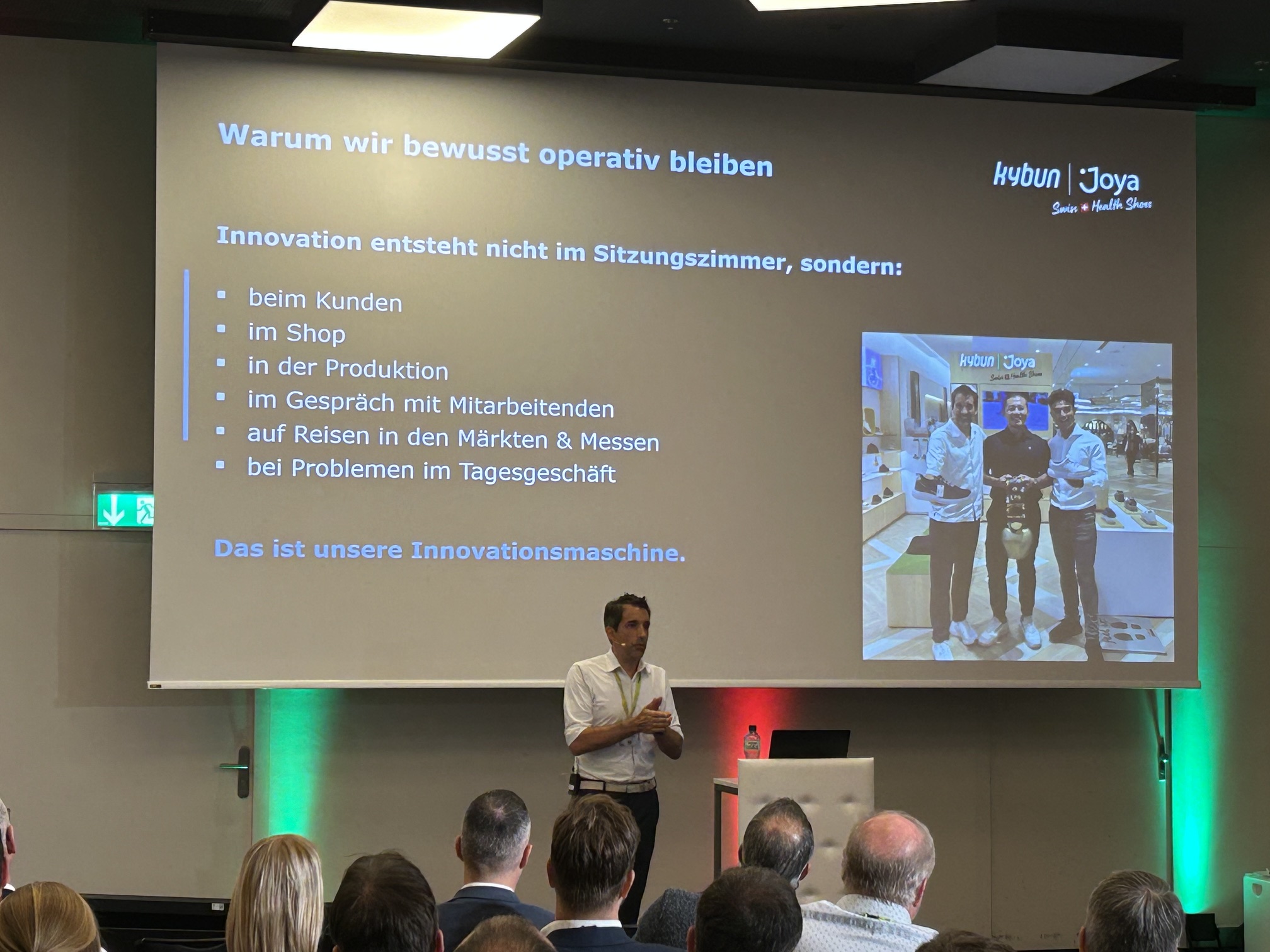
At kybun Joya, board members stay involved in daily operations by choice. They see that involvement as their innovation engine.
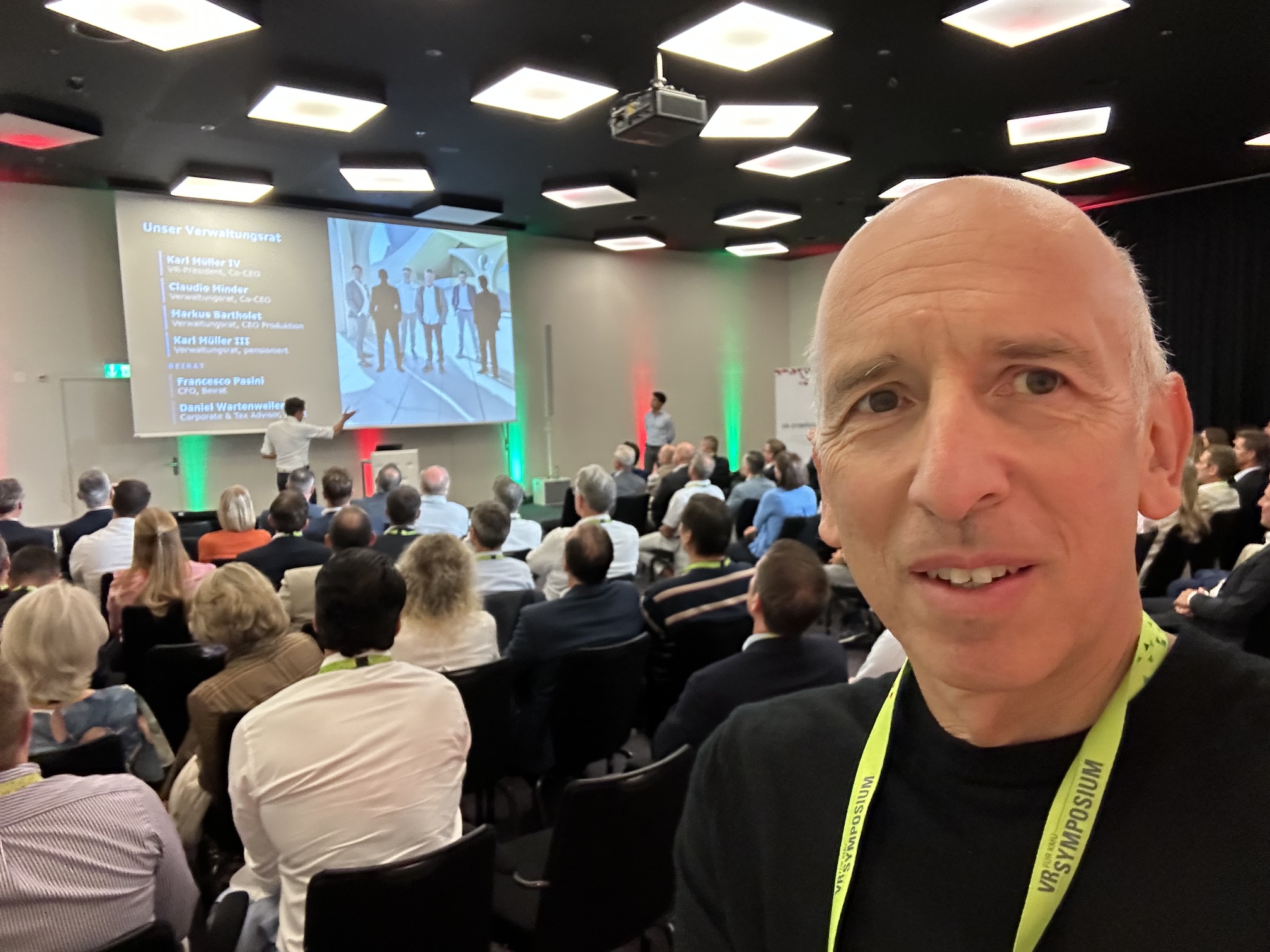
Claudio Minder and Karl Müller, co-CEOs and board members, explained their approach at the VR-Symposium 2026 in Zurich on 4 September. Their digitalisation story made the choice tangible: they experienced the problems, committed to rebuilding the systems and took responsibility for the difficult transition.
Close to the work, across 40 countries
For anyone unfamiliar with kybun Joya, the Swiss footwear business presented a footprint of 1,200 points of sale across 40 countries. Its figures also included 105 kybun Joya shops, four production sites, 250 employees and 400,000 shoes a year.
Keeping close to operations at that scale takes deliberate effort. Minder and Müller described how they work with customers, visit shops and production sites, and speak directly with employees and partners. They want to understand why a product works in one market and struggles in another.
Daily problems feed their strategic decisions. Operational involvement gives them access to details that can disappear when an experience is condensed into a management report.
A digitalisation decision they had to carry through
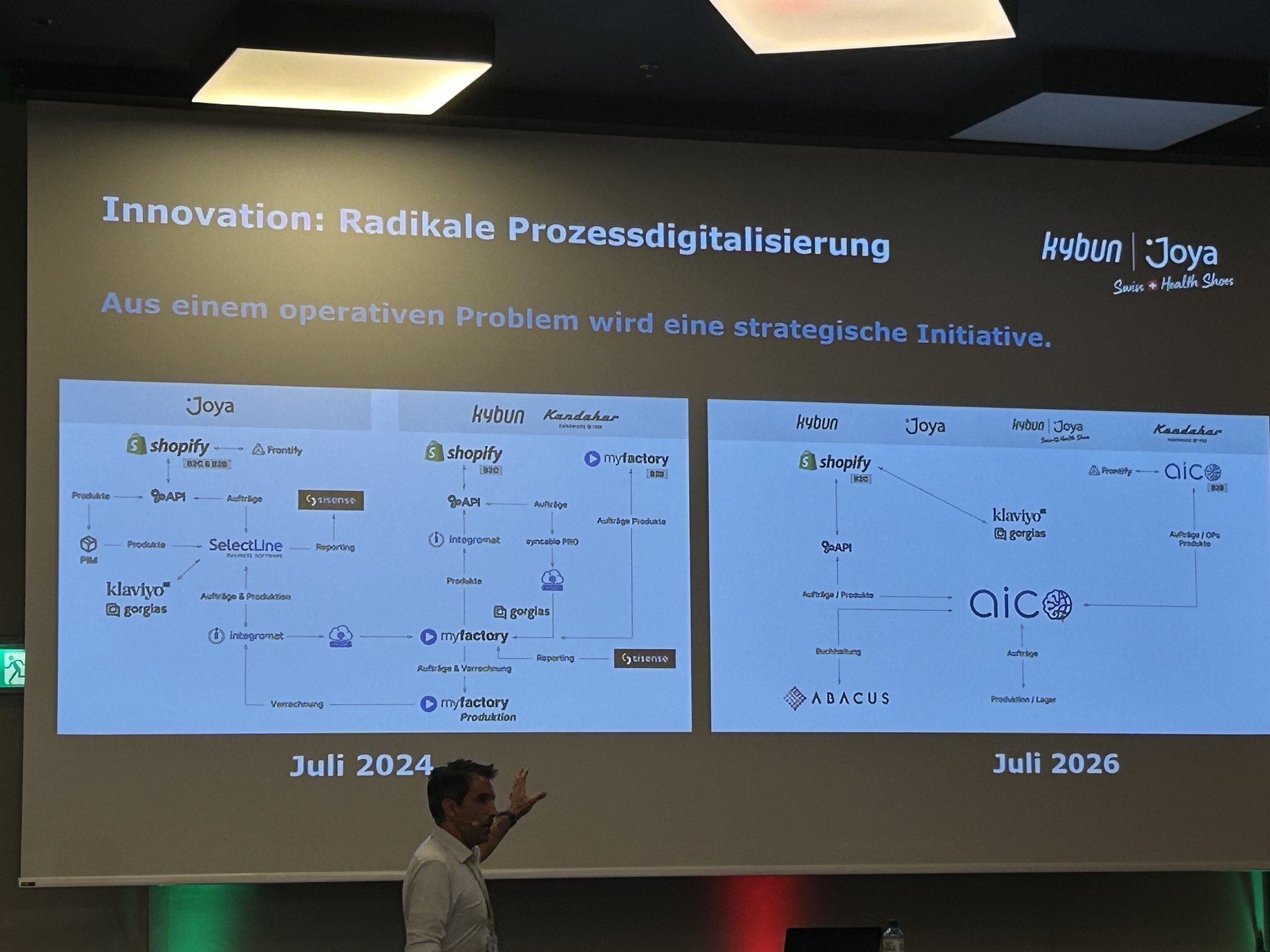
Claudio Minder described a business with multiple ERP systems, separate webshops and a tangle of interfaces and Excel files. Changing one part caused problems elsewhere.
“No one really understood our entire business.”
That is my English translation of Minder's words in the session. The problem went beyond choosing software. They needed a clearer understanding of how information and work moved through the company.
They decided to rebuild. Minder explained that they knew the transition would initially create more disruption. He spoke openly about the complaints that followed.
“We came up with the idea. We did it.”
His point was that the operational team needed the board to back the decision. Without that commitment, people would not have had the courage to carry it through.
The July 2024 and July 2026 architecture comparison shows the redesign: a simpler, more connected structure, including Shopify and Abacus. It documents the direction of the change. It does not, on its own, establish a financial return.
What operational involvement contributes
For me, this is where their chosen model matters. These directors experience the problems themselves, commit to a change and share responsibility for getting through the difficult part.
A board that understands how an order moves through the business can ask more precise questions about the systems supporting it. It can also recognise why a necessary change may make work harder before the new process settles.
That does not make every implementation decision a board matter. Kybun Joya also described clear responsibilities, separate board meetings and the need for strategic distance. Operational involvement is their deliberate choice, not a universal model for every board.
But it is central to how they pursue innovation. The useful takeaway is the connection between direct experience and the willingness to support implementation when it becomes uncomfortable.
For the next digitalisation discussion, I would ask: Which problem have we experienced alongside the people doing the work, and what has that changed in our decisions?
About this note
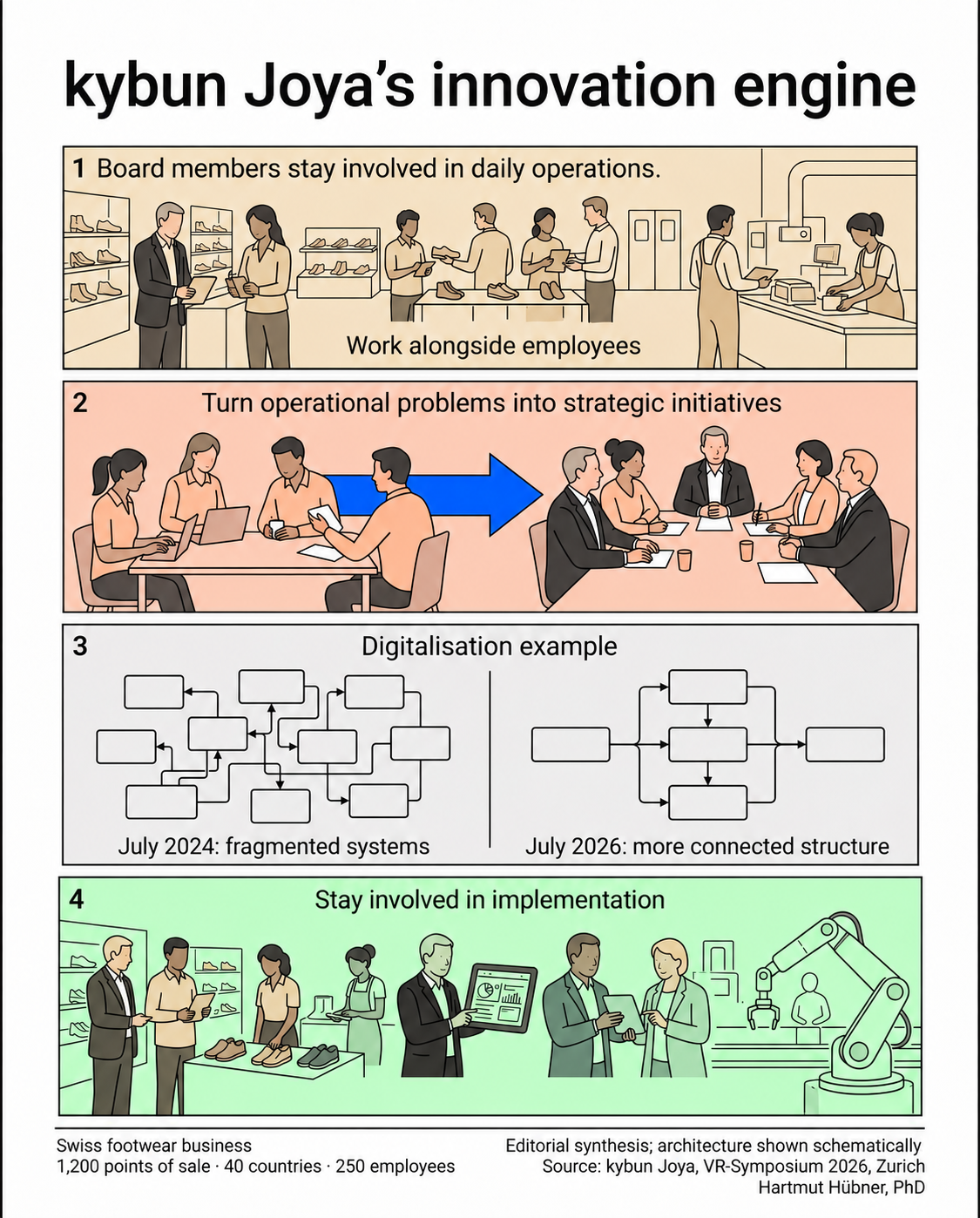
Based on my transcript and photographs of Claudio Minder and Karl Müller's session at the VR-Symposium 2026 in Zurich. Quotations are translated from German; company figures are those presented at the event. The fourth slider image is an editorial illustration, not a technical reconstruction of kybun Joya's systems.