Leadership & AI
Rethinking Communication in 2026: A CEO Guide for Leading with AI
AI can carry more of the information load. Leaders still have to create clarity, make decisions, work through disagreement, and give change a direction.
23 July 2026
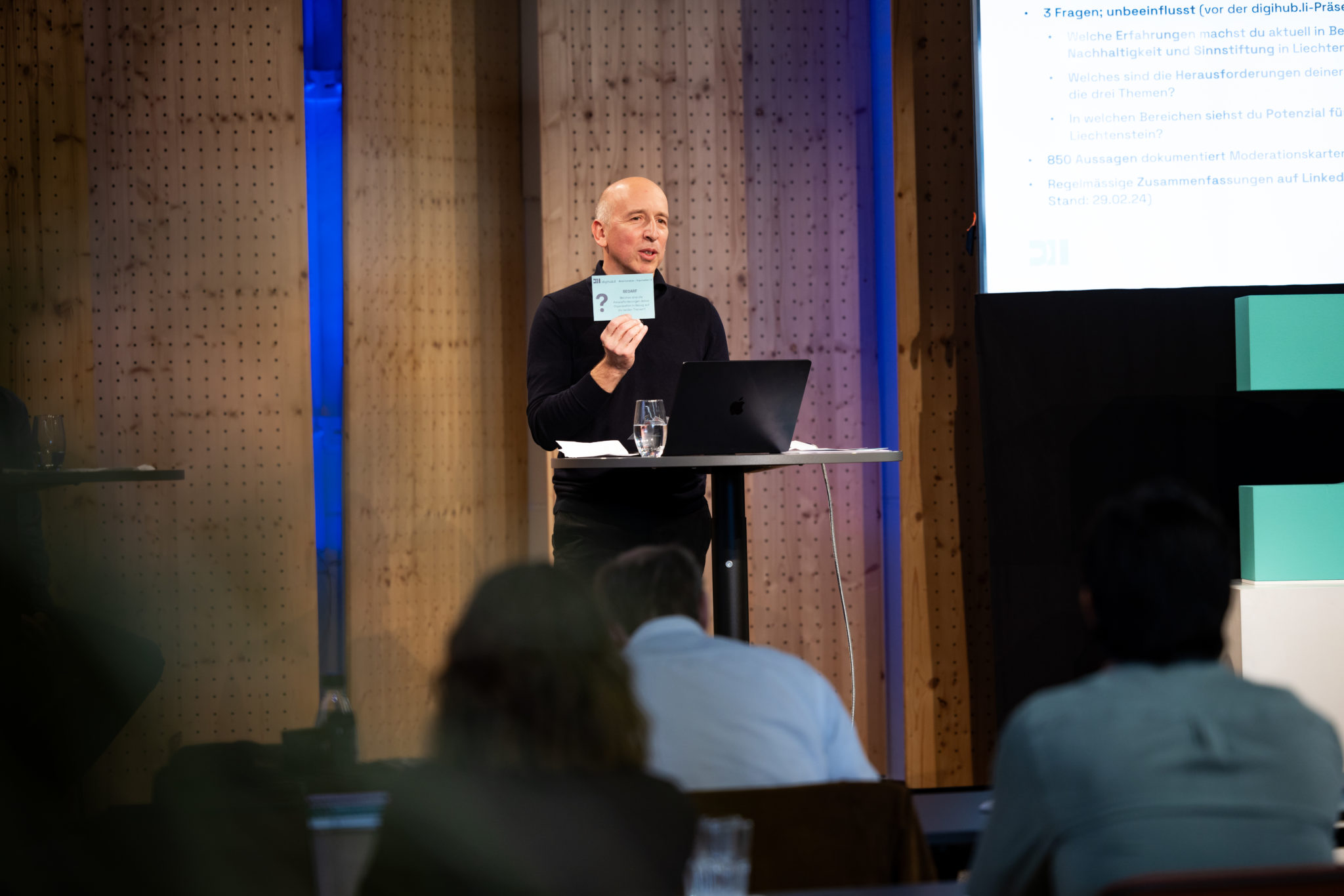
In 2021, I published _Kommunikation neu gedacht_ with Donatus Grütter, Diana Oser, and Frank Thiele. We wrote it during the pandemic and thought we had already seen a major change in working life.
We had not.
AI now drafts, searches, summarises, and analyses in minutes. That removes part of the information burden. It does not remove the leadership burden. Someone still has to explain why the work is changing, decide when the evidence is incomplete, listen when people hesitate, and set boundaries for how AI is used.
That is why I wrote a new 2026 edition: Rethinking Communication: The CEO's Guide to Leading with AI.
Get the English 2026 CEO Guide
The central idea
The guide starts from one sentence:
AI carries the information load. The communication load is yours.
This is not an argument against AI. I use it every day to research, write, build software, and organise work. It is an argument for putting the technology in its proper place.
AI can make information easier to find. It cannot decide what your organisation stands for. It can prepare options. It cannot take responsibility for the decision. It can simulate a difficult conversation. It cannot build trust with the person sitting opposite you.
The more capable the systems become, the more visible these human responsibilities are.
Why communication has become the bottleneck
The Culture Compass 2026 found a combination that many leadership teams will recognise: strong engagement alongside slow, bureaucratic decisions. In the same study, 91 per cent of respondents prioritised communication and persuasion as future skills.
Atlassian's State of Teams research points to another part of the problem. Leaders and teams spend a quarter of their time searching for answers. The information often exists, but it is scattered across meetings, messages, folders, and people's heads.
AI can reduce that search burden. But an assistant connected to confused ownership, contradictory documents, and unclear decisions produces faster confusion. The communication system has to be designed together with the AI system.
What the new guide covers
The English guide has 32 pages and ten practical chapters. Each chapter asks the same two questions: what can AI take over, and what remains leadership work?
The topics include:
- the CEO as communicator-in-chief in an AI-enabled organisation
- listening at four levels and knowing what should remain human
- faster meetings and decisions without falling into the consensus trap
- difficult conversations, purpose, and a story worth communicating
- Design Thinking and Open Innovation with AI
- the CEO as orchestrator of people, knowledge, tools, and agents
- a 30-day plan that turns ideas into working habits
The guide also includes its full bibliography. Current claims draw on research and reports from 2025 and 2026; older works, including _The Oxford Handbook of Open Innovation_ and the original book, are clearly marked as framework references.
Open Innovation changes when AI joins the search
Open Innovation used to be constrained by the cost of finding and evaluating ideas outside the organisation. AI changes that search. A small team can scan research, patents, start-ups, customer discussions, internal documents, and adjacent markets much more widely than before.
The hard part moves. It is no longer only finding signals. It is deciding which sources are trustworthy, which questions matter, who owns the decision, and what knowledge may enter an external system.
That is why Open Innovation with AI is also a communication discipline. It needs clear briefs, visible assumptions, protected knowledge, and conversations with the people affected by the result.
Start with 30 days, not a transformation programme
The final chapter proposes a small starting plan:
- Week 1: audit communication and make your own AI use visible.
- Week 2: improve listening and rehearse one difficult conversation.
- Week 3: make one decision by consent and run one AI scanning sprint.
- Week 4: clarify purpose and create one protected space for experimentation.
After 30 days, the organisation is not transformed. But it has evidence. A few new habits are more useful than a fourteen-slide roadmap that never reaches daily work.
How to get the guide
The guide is free for AI Field Notes subscribers. Choose the English version on the book page, subscribe, and confirm your email address. Listmonk then sends the download link automatically.
Receive Rethinking Communication by email
AI Field Notes arrives on Fridays with one practical note on AI strategy, open innovation, better decisions, new business models, and trusted systems for daily work. No daily sequence and no generic AI news.
The original book asked how communication could make organisations more purposeful, open, and capable of better decisions. The new guide keeps those questions and places them in the working context of 2026.
The technology has changed. The need to lead has not.