AI & Innovation
What the AI Café revealed about AI in recruitment and compliance
At the AI Café in Schaan, people from HR, legal, compliance, and fiduciary services examined two working systems: RheinTalent and controlled AI workflows for compliance. In both cases, AI prepares the work and people make the decisions.
23 August 2026

1 / 4
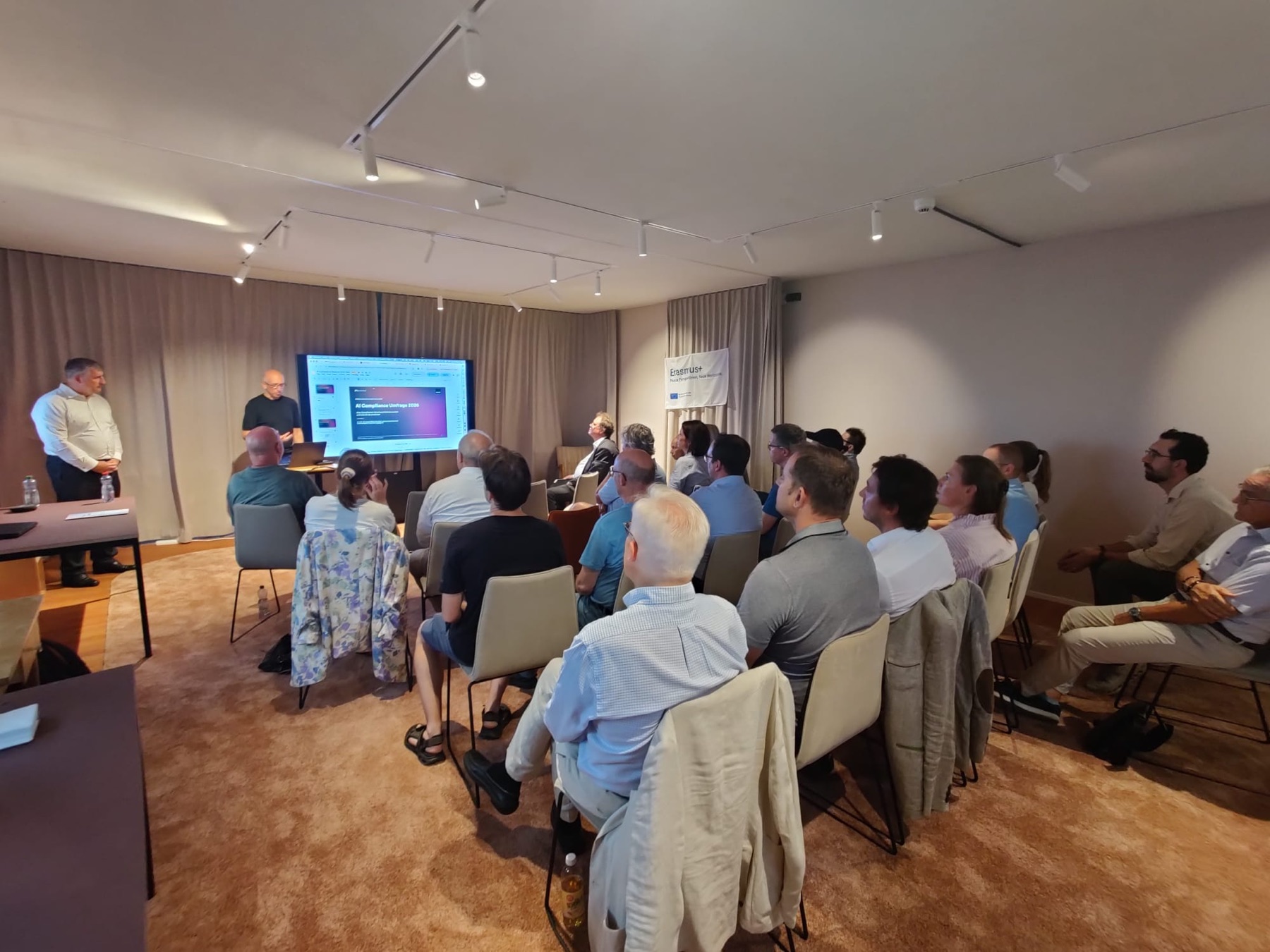
On 20 August, people working in HR, legal, compliance, and fiduciary services met at the AI Café in Schaan. The discussion was not built around general predictions. It examined two systems that can already be tested: RheinTalent and AI-supported compliance workflows.
The topics looked very different at first. Yet both working groups reached the same boundary: AI can organise information, make skills or gaps visible, and prepare a first draft. People retain the decision.
RheinTalent prepares a better first conversation
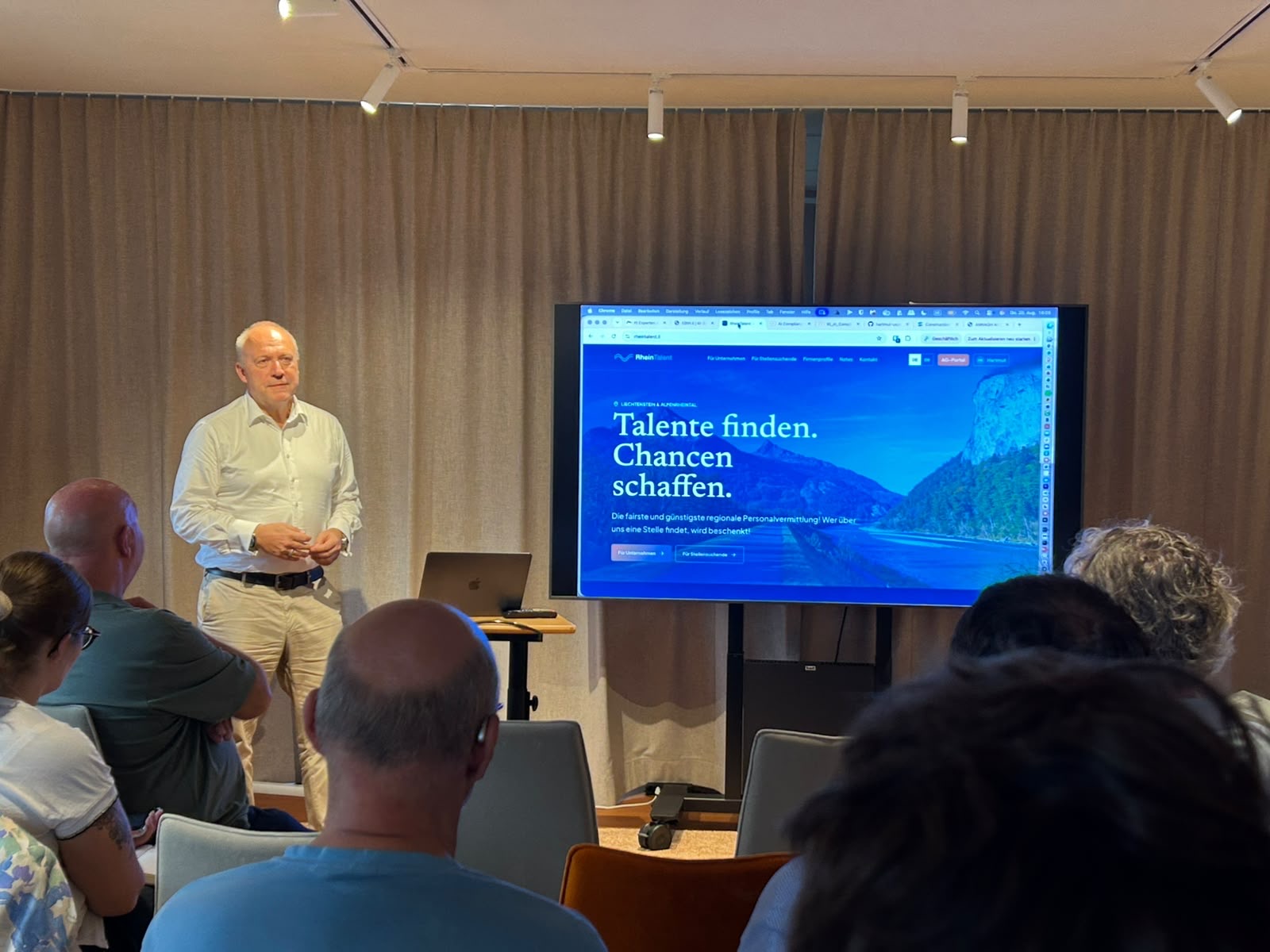
Alexander Jeeves, CEO of Jeeves Group, introduced RheinTalent. Companies can publish vacancies, while candidates can start with an anonymous profile.
A CV only captures part of what someone can do. Job titles and keyword searches reinforce that limitation. People with relevant transferable skills can easily be missed because they previously worked in a different sector or role.
RheinTalent starts earlier. AI structures experience, proposes possible skills, and explains why a profile and a role might connect. Motivation and the impact someone wants to have are also considered.
The platform does not issue a suitability verdict. Contact approval and selection remain human decisions. A matching result can prepare a conversation, but it cannot determine whether two people will work well together.
In compliance, the bottleneck often comes before judgement
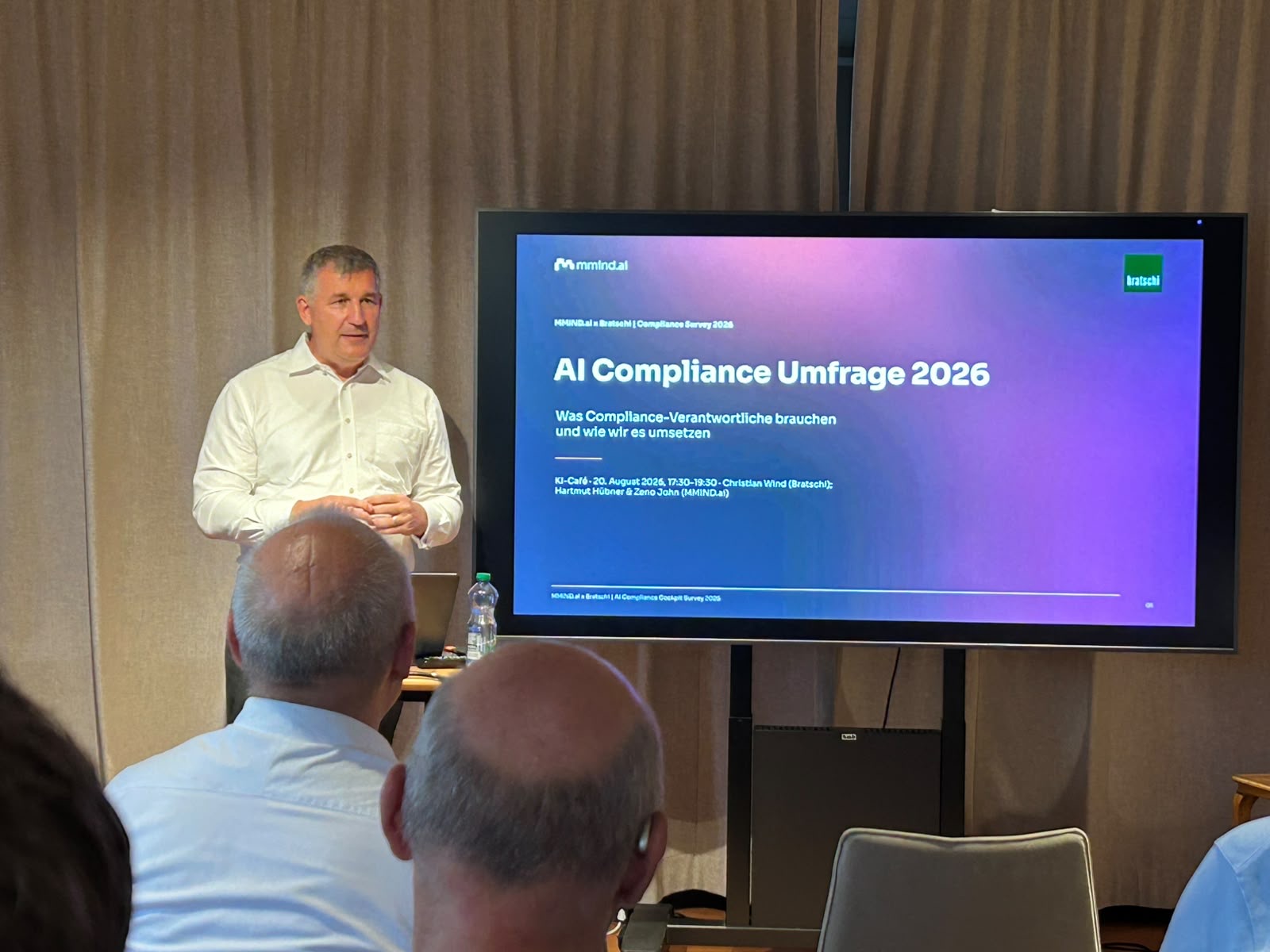
Christian Wind, partner at Bratschi in Zurich, presented the AI Compliance Survey 2026. The detailed survey is exploratory rather than a market forecast. Its value lies in making concrete work problems visible.
Teams spend substantial time checking websites and PDFs, assigning changes, maintaining spreadsheets, locating evidence, and turning material into consistent reports. The bottleneck often appears before the legal assessment itself.
AI can monitor approved sources, compare documents, connect evidence to requirements, and prepare a report. A qualified person still needs to assess relevance and meaning, identify gaps, and approve the result.
The survey and working groups point to four useful starting tasks:
- monitor regulatory changes and compare them with the existing position
- prepare compliance reports from approved documents
- map requirements to available evidence
- prepare recurring matter and document workflows
Start small and measure the actual work
A first test does not require a major technology programme:
- Choose one recurring task with clear inputs and a reviewable result.
- Classify the data as public, internal, or particularly sensitive.
- Define what AI may prepare and where a qualified person takes over.
- Test with approved material and measure time, errors, and rework.
This is not full automation. It is a working tool that a team can inspect, improve, or reject.
The new whitepaper documents the survey, prioritised starting tasks, a tool review framework, and the governance questions that should be addressed before production use.
Read the whitepaper and implementation guide
The AI Café did not produce a simple answer. It produced something more useful: good AI systems do not replace human judgement. They create better conditions for it.