Strategy & Decisions
When AI joins strategy, who gets heard?
AI can help an SME gather more perspectives on a strategic question. The harder design choice is whose input survives the summary and who decides what happens next.
2 October 2026
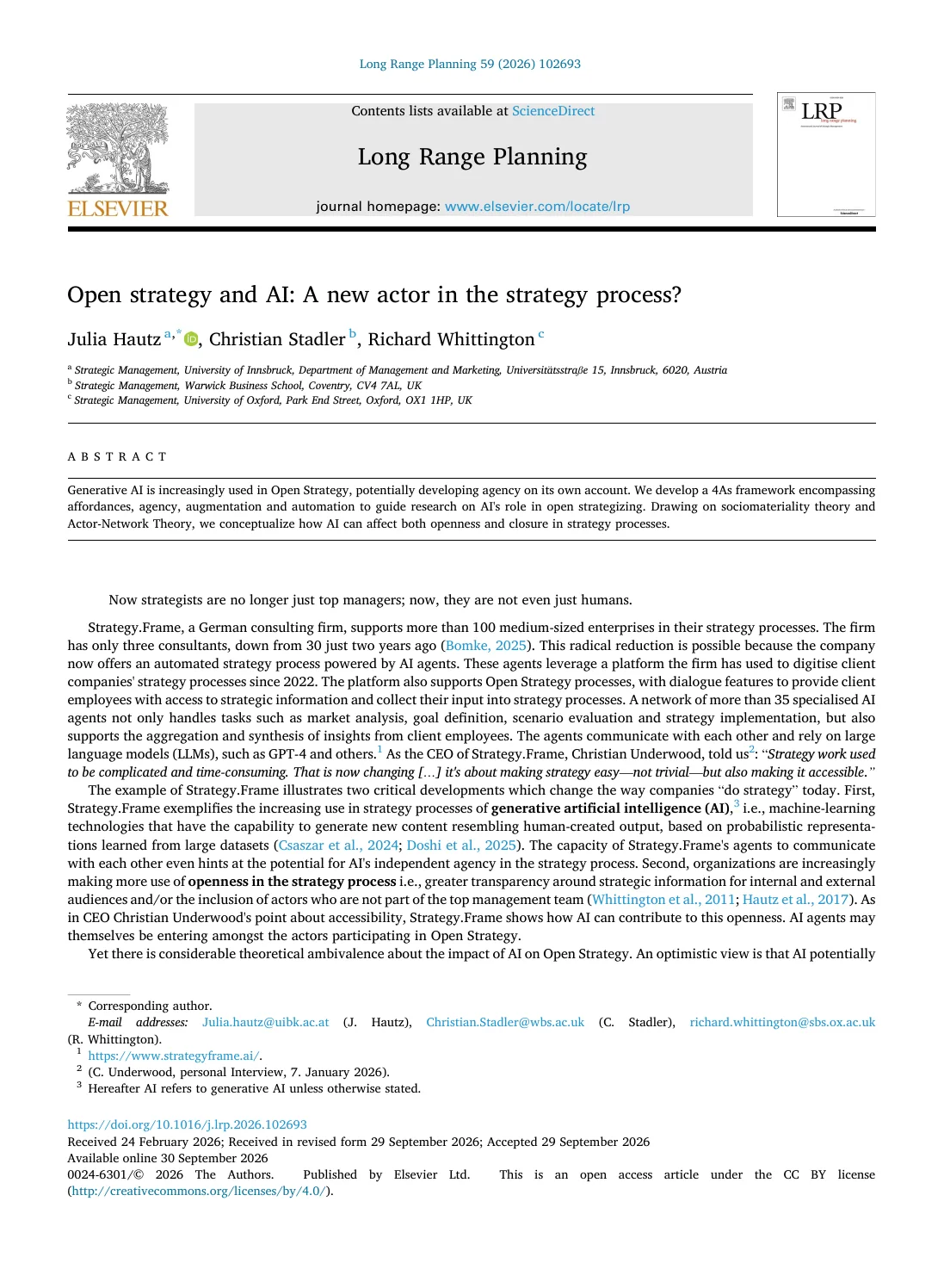
Imagine asking everyone in a company to contribute ideas about its future. Management then reads only a summary prepared by AI. The meeting has more input than before, but which contributions actually reach the people making the decision?
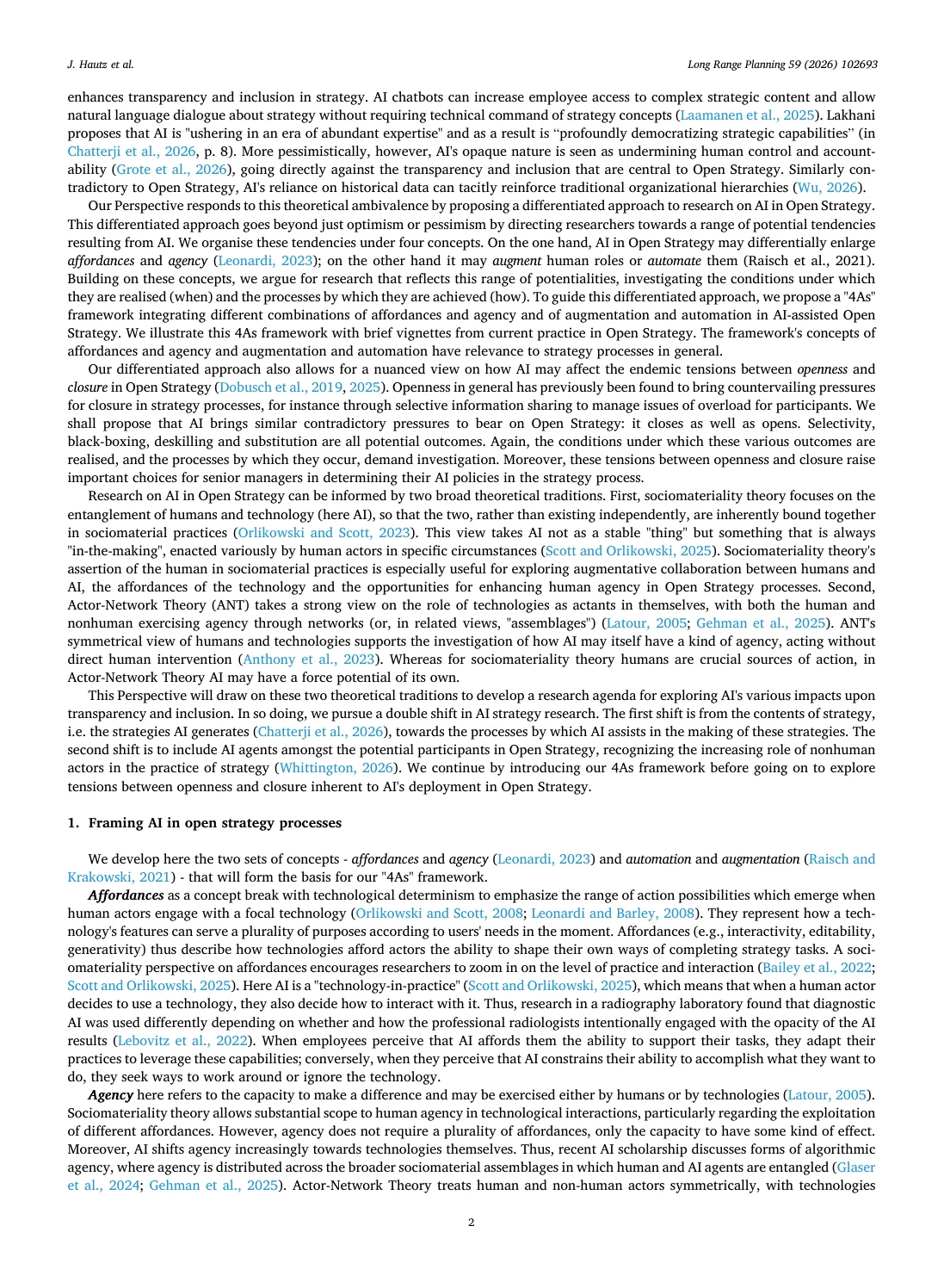
This is the question I took from a new Open Access perspective by Julia Hautz, Christian Stadler and Richard Whittington in Long Range Planning. The authors examine AI as a possible new actor in Open Strategy: strategy work that is more transparent and includes people beyond the usual leadership circle.
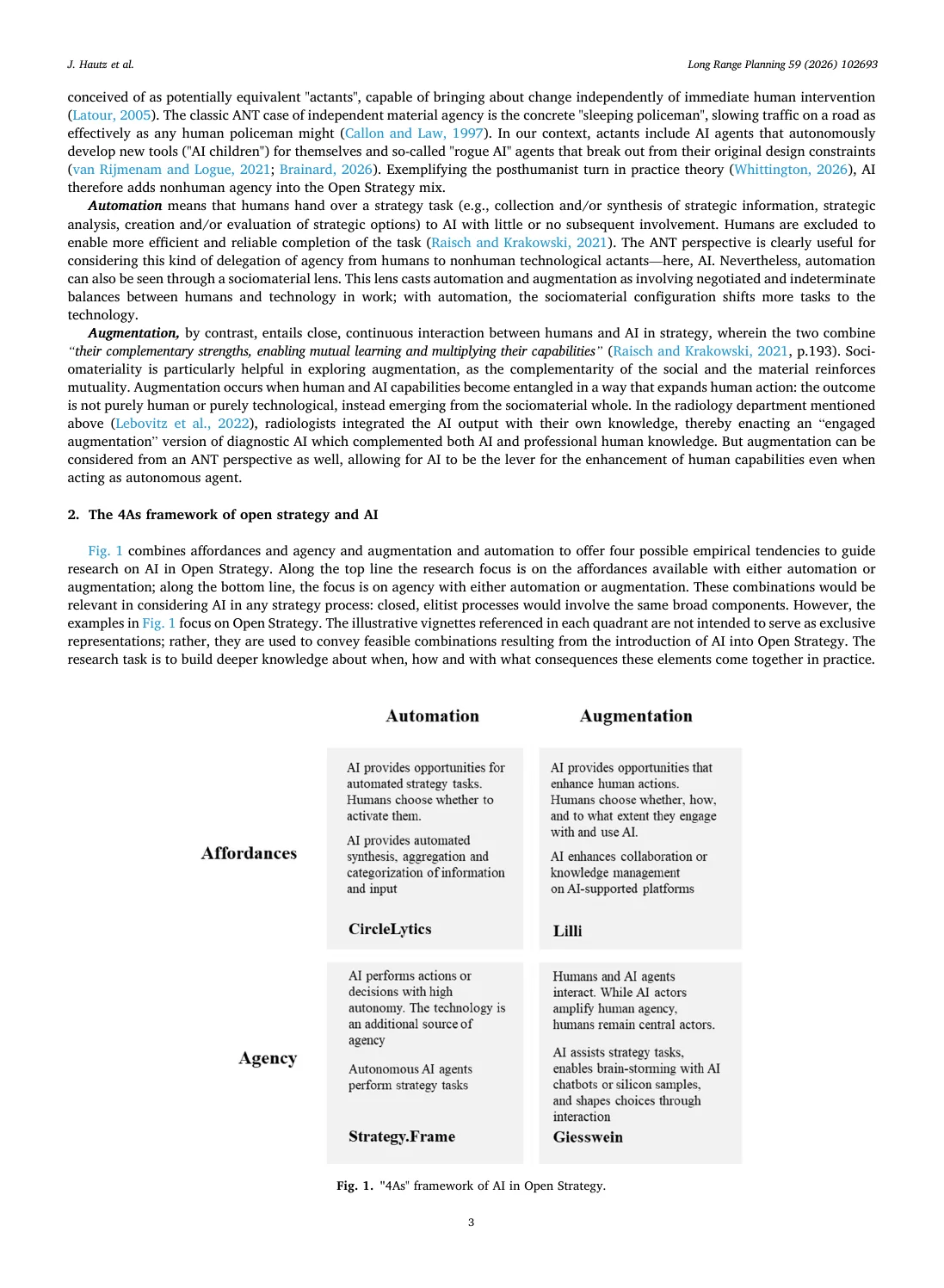
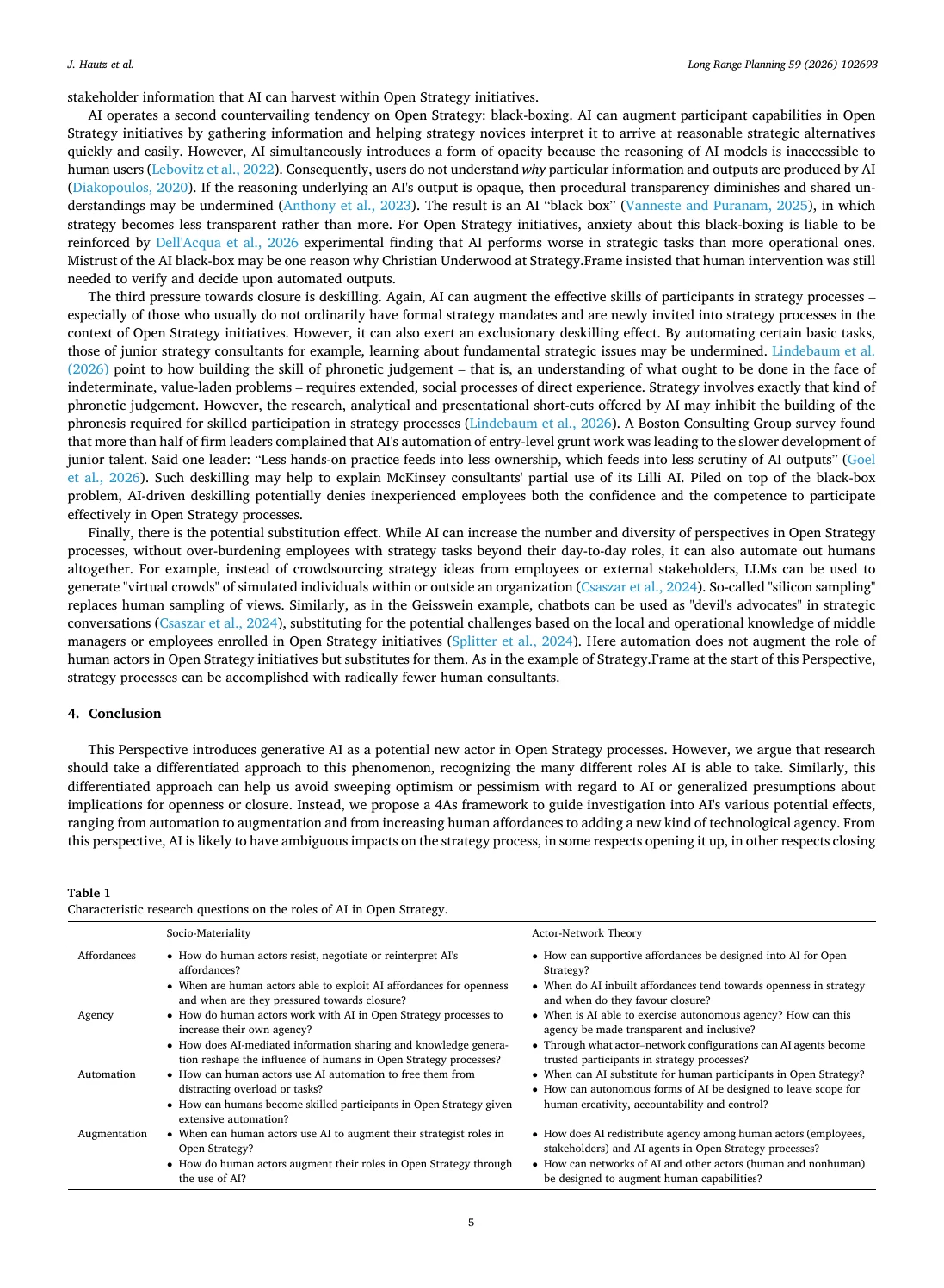
The paper offers a framework for thinking about what AI makes possible, where it gains influence, which tasks it automates and where it strengthens human participation. It does not measure an improvement in SME strategy. Its value is in making choices about the process visible.
The opportunity for a smaller company
An SME may have little time for a formal strategy department, yet it already holds valuable knowledge in sales, customer service, operations and its external relationships. These people encounter different sides of a customer problem. AI can help collect their observations, group recurring themes and expose disagreements before the leadership team narrows the options.
That could make participation feasible without filling everyone's week with workshops. The possible gain is a broader view of the problem and a clearer record of what people contributed. Whether it produces a better decision still has to be checked in a real company.
The selection hidden inside a summary
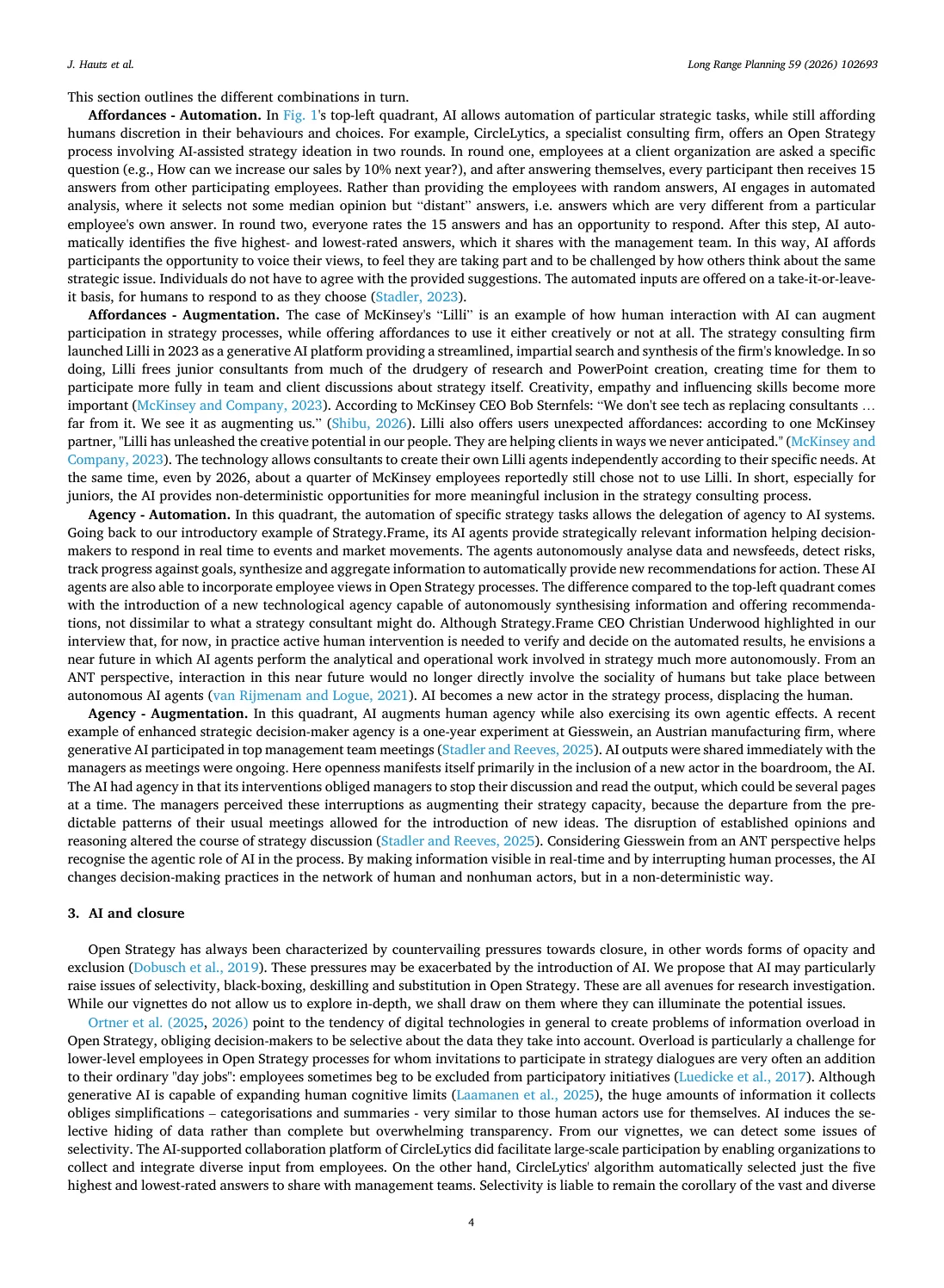
One vignette in the paper makes the trade-off concrete. In a two-round process, employees exchange and rate one another's ideas. The system passes the five highest-rated and five lowest-rated answers to management. This keeps the volume manageable and creates a chance to see both support and dissent. It also means other answers do not reach that table through the same route.
Hautz, Stadler and Whittington describe four ways AI might narrow a process intended to be open: it selects what is seen, can make that selection opaque, may reduce people's opportunity to practise strategic judgement, and could substitute simulated voices for real participants. These are possible effects to investigate, rather than outcomes established by the paper's examples.
For a leader, the design question is practical: can contributors inspect and correct the summary? Can the team see what was left out? Does anyone have to explain why an unusual objection was set aside?
What this means for our approach at EDIH.li
At EDIH.li, we begin with a specific business task rather than a preset product bundle. We can bring in appropriate experts from the partner network when the task calls for them. The company still decides who participates and what information may be shared.
Consider an illustrative service business weighing a new maintenance offer. Sales hears requests for it. The service team knows which problems recur. Finance sees the economics. A useful AI step would organise these observations and point out where they conflict. The management team would then choose one assumption to test with real customers. An AI-generated customer persona cannot provide that customer evidence.
A first test without a new platform
Choose one live strategic question and ask people in leadership, customer-facing roles and operations for their views. Before using AI, agree which inputs may be processed and who will see them.
- Ask AI to group the responses and mark disagreements, while retaining the original contributions.
- Compare the summary with the source material. Look for missing minority views, confident claims without support and important context that was compressed away.
- Let the participants correct the picture before management chooses an option.
- Record one assumption to test with customers or partners, the person responsible and what result would change the plan.
The aim is an accountable route from more voices to a smaller, testable decision. The paper does not prove that this route improves outcomes. It helps us ask where AI opens the strategy table and where it quietly closes it again.
The full eight-page article is available to scroll through below. It is reproduced under CC BY 4.0 with attribution to the authors and publisher. For another view on widening options while keeping responsibility with people, see my Note on strategic decisions with AI.
Read the paper
“Open strategy and AI: A new actor in the strategy process?” — Scroll through all 8 pages. The original PDF is available below.