Tool
Tool #20: Flow Journey
What is it for? The Flow Journey can support your team in living integrality, finding individual and collective flow at work and developing collaboration and resilience.
What is it for? The Flow Journey can support your team in living integrality, finding individual and collective flow at work and developing collaboration and resilience.

For what? Building on the research project described at the beginning, we have identified fields of action across all four quadrants that are crucial for an organization to enter into a
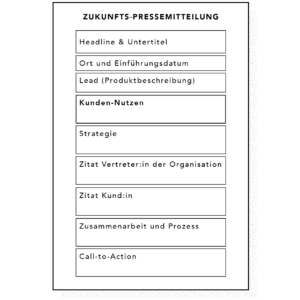
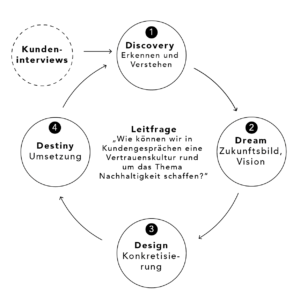
For what? Even in the early days of Amazon, CEO Jeff Bezos demanded of his teams that they work on a new product or service long before it was launched.

What for? Story mapping follows on from story sourcing in terms of content. While in story sourcing you have lively discussions with employees and other stakeholders about the
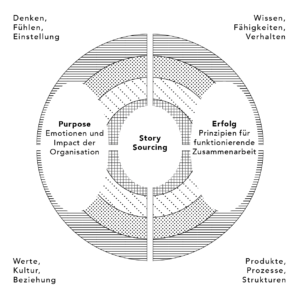
For what? As part of cultural transformation projects, we are often initially faced with questions such as: Where do we currently stand in terms of our organizational culture? Which forms of culture

What is it for? The case discussion is a widely used and proven tool from Otto Scharmer's Theory U (2020). It can be used both as a vessel

I have been working as a team leader in companies for over 20 years. This has shown: The critical moment for innovation and change usually comes when communication fails and tensions become visible. It is not uncommon for initiatives to fail at this point. Therefore, I am available as a communicative sparring partner to find meaningful answers to difficult questions and to make better decisions. I also conduct research on important change dynamics in business and society.